Today we will talk about qualitative measures of biodiversity.
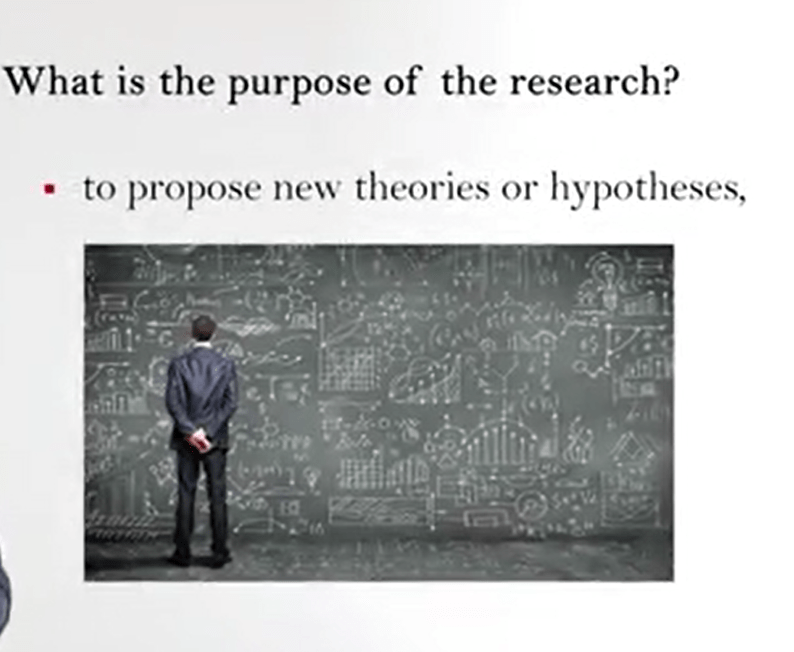
First of all, we need to ask what is the purpose of the research. Because we can have different ideas on what we want to collect and for which purposes. One of the main reason the qualitative research in fact is to increase scientific understanding of the phenomenon, more interest from a theoretical point of view, proposing new hypothesis.
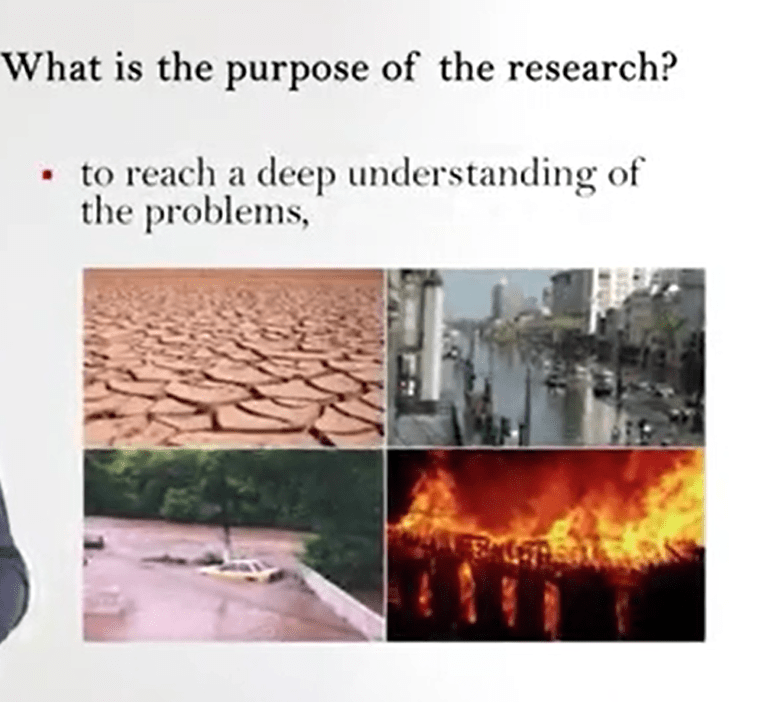
It is critical to use quality research asthe basis for the experience, but there is a great need to understand how and whento reach the formulation of hypotheses. And experimental theories that can be tested using quantitative approach explicitly. The second purpose can be to reach a deep understanding of the problems.
Quality research as an important value for investigating complex and sensitive issues. For example, when you are interested in understanding not only the composition of the communities but also the relationship between species, mutually symbiosis, cooperation, etc. In these cases it would be hard to develop a quantitative method which would not lead to more than a series of values to simplify these relations despite the quantitative approach is predominant in this type of study.
If the aim is to try to reach a deep understanding of how species behave in a community and the role of biodiversity in the ecosystem, the qualitative analysis is essential. The true purpose could be to provide detailed information albeit in smaller quantities.
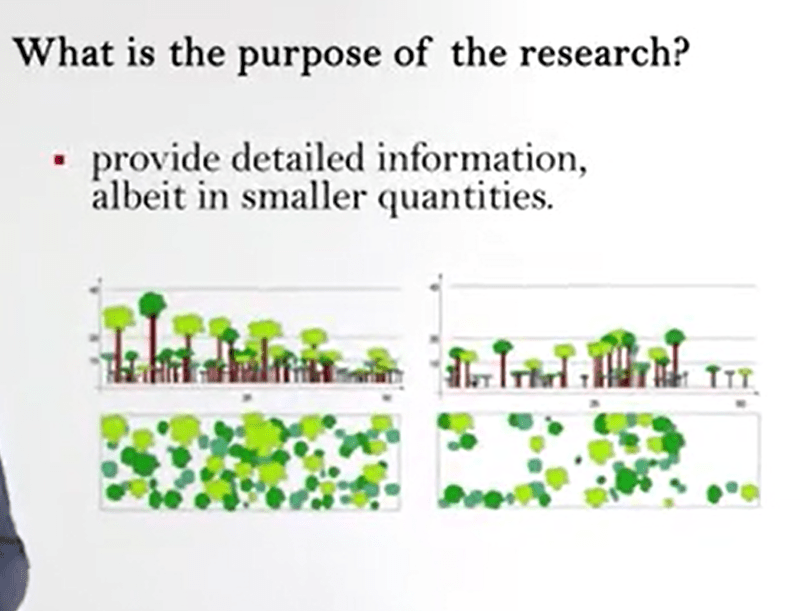
Qualitative results certainly excel ingathering information in great detail. Of course, there are detailed quantitative studies and much as qualitative because they providea collection of many numerical data. But in detailed quantitative research, such data tend to limit the analysis. The detail provided by qualitative research appears at the same time a blessing and a damnation.
What is positive is that this approach allows to describe the phenomena of interest in great detail, including aspects impossible to describe through the numbers. In fact, some of the best qualitative research is often published in book form with the style that approach almost a narrative story. Because most of the sector of scientific journals are careful not to propose something that deviates from the Cartesian or Baconian scientific method. The most negative aspect of quantitative research is that when this level of detail is available, it is difficult to determine what are the processes that can be generalized. In fact, many quantitative do don’t mind to generalize but simply they create detailed description of the phenomena of the study.
So let’s see how to conduct a quality research on biodiversity in practice. There are different methods such as field observation by the direct experience of the environment to be studied by adopting a procedure of narrative description types. A second method can be analysis of the experiences and perceptions of other or the population living in the near of the site of study. The third method can be the acquisition of the information derived from indigenous groups. For example, plants with medicinal use, relationship between animals, ecological functions, etc. Effort needed can be recognition of the fact that the human responses to different environmental condition are often based on the perception rather than on predominant variables and that this information can be integrated in the understanding of biodiversity trends.
Addressing these issues and figuring out how to integrate the quantitative data and quality information in a science based assessment becomes easier when it is recognized that both approaches can compliment each other, and together reach the assessment of the result. A growing number of case studies makes use of the successful combination of technical, scientific, quantitative, facts, figures, tables, data, and qualitative description, perception, etc., approaches to assess biodiversity.
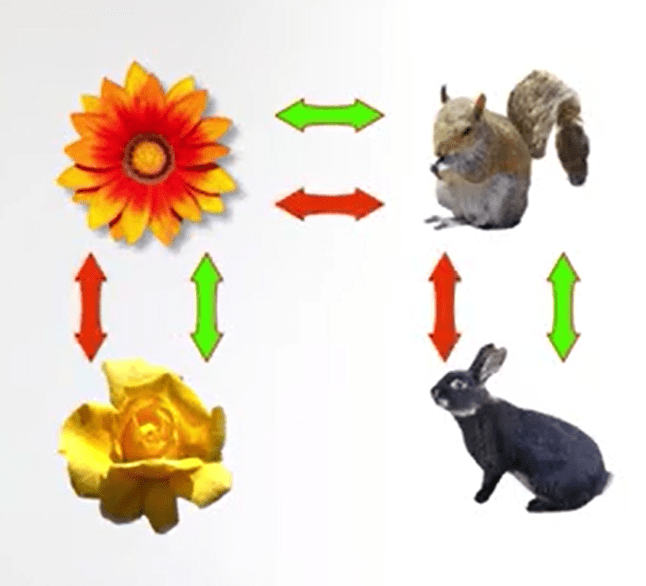
A fifth recommended approach for the collection of qualitative information could be the compilation of a table showing on a work sheet to be used in the field the following information. For instance, mutual relationship between plants, mutual relationship between animals, or between animals and plants, antagonistic relationship between plants, between animals, or between plants and animals. If some species appear to play a key role, so which, how, and why? Or if some species seems fundamental in considerance of coecosystem, which, how and why?
So describe and write the list of the species which will role they play? Or if some species seem evolutionary coadapted or coevolved with each other. So, they find which, how, and why. Or if some species, for instance, appear to play key roles in the study areas, while others are only redundant or play a support function. In other case we can take notes, if some species appear to be more resilient to the effect of human disturbances or the study area, while others are more resistant or others completely disappear. There are many variations to this information request which can be adapted to the type of studies that we want to carry out and particularly to the objective of the research. This was a general review of the quality meter that we can use to analyze our study area and to merge with quantitative data. In this case, we have a more complete information that can be available for different studies and different approaches. So, thank you and see you in next lecture.
 Mathieu GT
Legg igjen en kommentar