Today, we will talk about the distribution of biodiversity. Two main processes for coexistence have been proposed. The first one is the avoidance of competition, and the second one is phenotypic plasticity. So there are three main patterns toexplain biological diversity, speciation, extinction, and dispersal

First of all I would liketo provide you an example. The evolutionary history of lemurs occurred in isolation from other primates on the island of Madagascar forat least 40 million years. Primates first evolved sometime between the middle Cretaceous and the early Paleocene periods. Once part of the supercontinent Gondwana, Madagascar broke away from eastern Africa. The likely source of the ancestral lemur population about 160 million years ago and from Antarctica between 80 and130 million years ago.
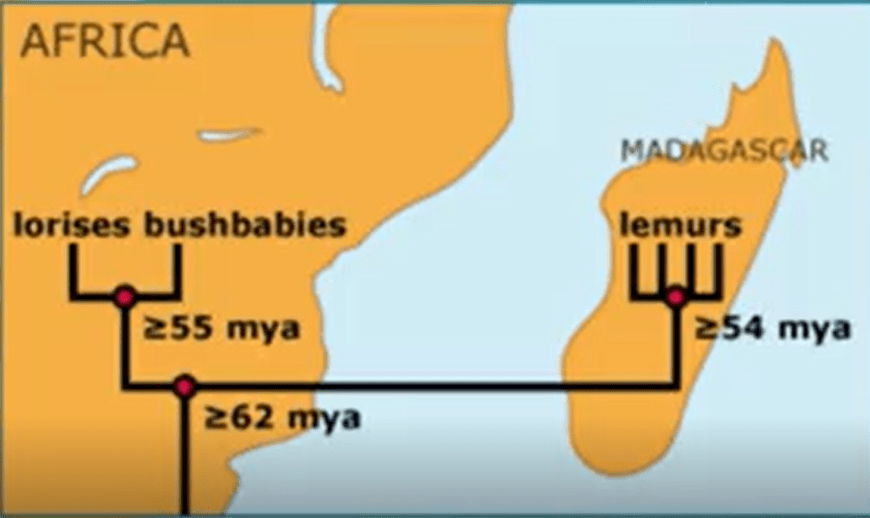
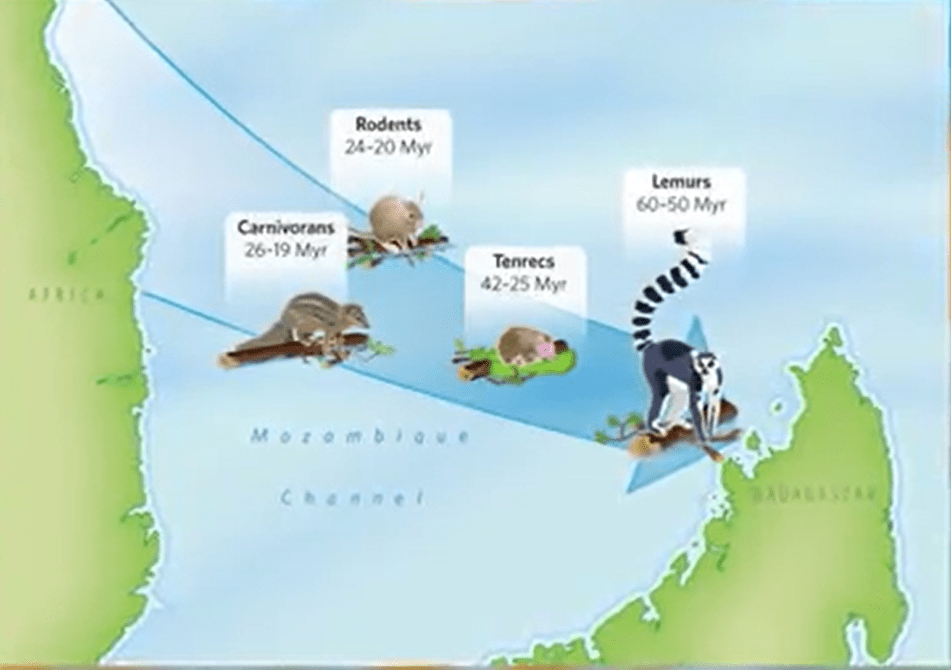
This separation dates and the estimate age of the primate lineage preclude any possibility that lemurs could been on the island before Madagascar pulled away from Africa, an evolutionary process known as vicariance.
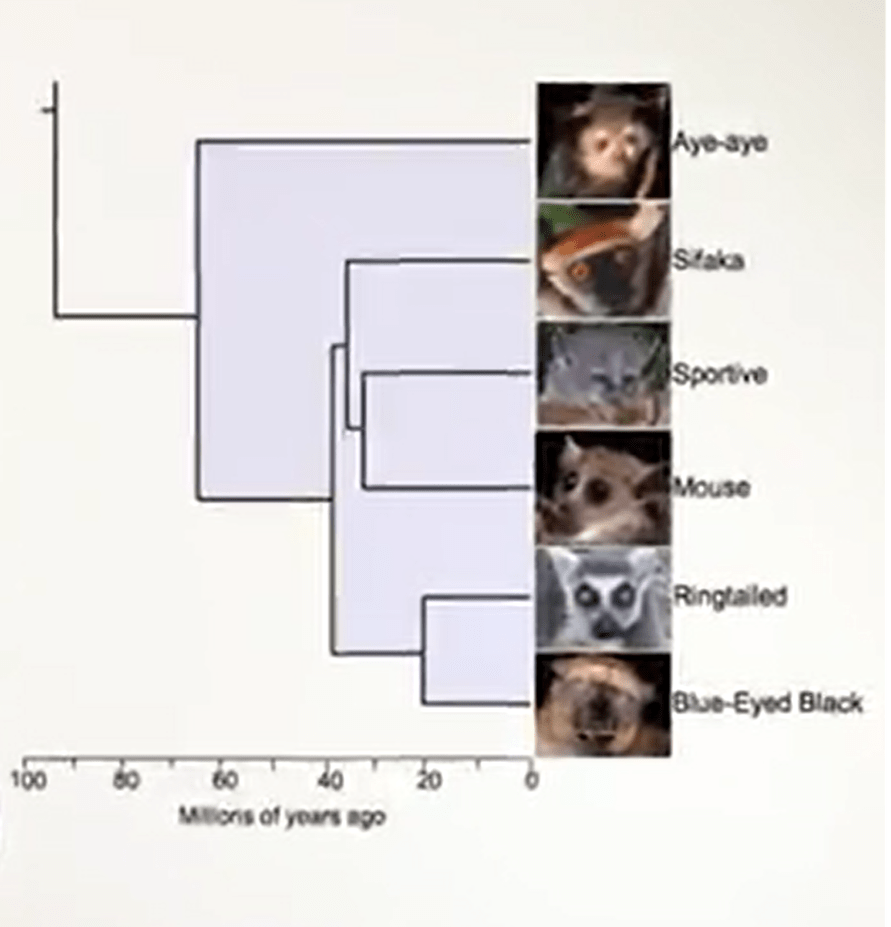
Oceanic dispersal, rafting, remains the most accepted idea onhow species colonized Madagascar. Lemurs have used the same way to colonize Madagascar so they rafted on the sea and they reached the island. In that island they diversified so much that now we have a plethora of different species oflemurs on that island.
Vicariance

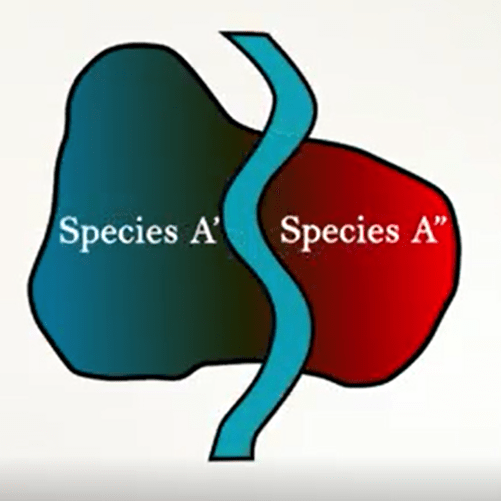
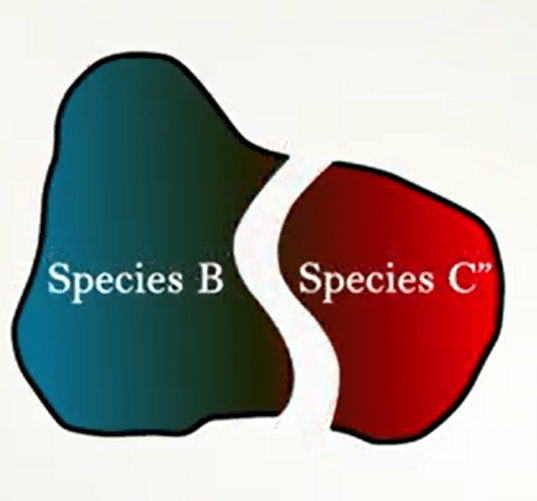
As I told you, vicariance and dispersal plays crucial role inthe evolution of biological diversity. Vicariance is a process by which the population of one species is splitted in two parts because of the formation of a physical or a biotic barrier. This barrier prevents the gene flow. So in this way, these two metapopulation evolve separately, and in this way, this two metapopulation cometo be two different species.
Dispersal
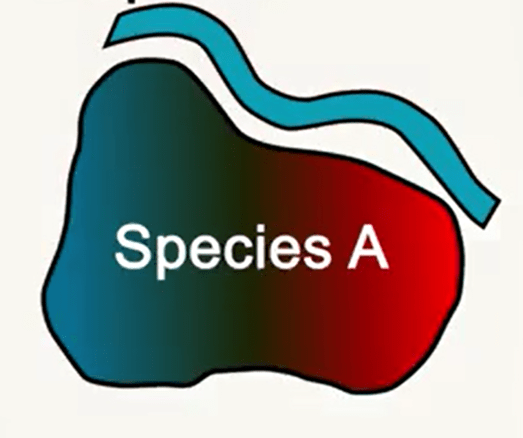
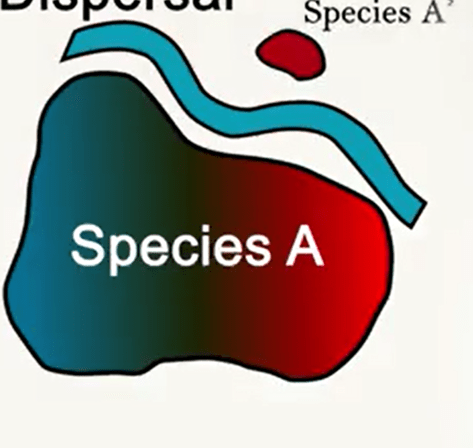
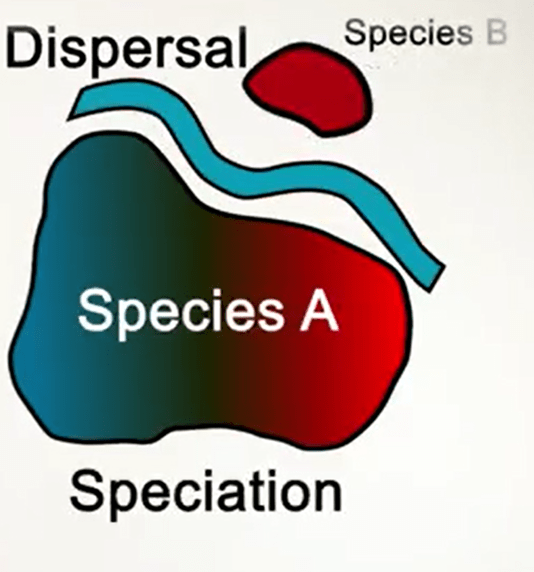
Dispersal instead is a process according to the idea of dispersal over new lands. So these individuals from the population of the original species move away from the original population, andin this way they evolve. So both of them are process of allopatric speciation.

So with vicariance when thereis a barrier, the species say that was the original species candifferentiate into two species b and c. But when there is a dispersal processthe species a keeps the species a. And only the individuals that moved awayso they are completely differentiated by the original population, can evolve ina different species through a subspecies. So they became a species b. So we have species a and species b. Both biogeographical processes resultin isolation of a population by a geographical barrier followed bythe differentiation of new taxon by allopatric geographically separated speciation.
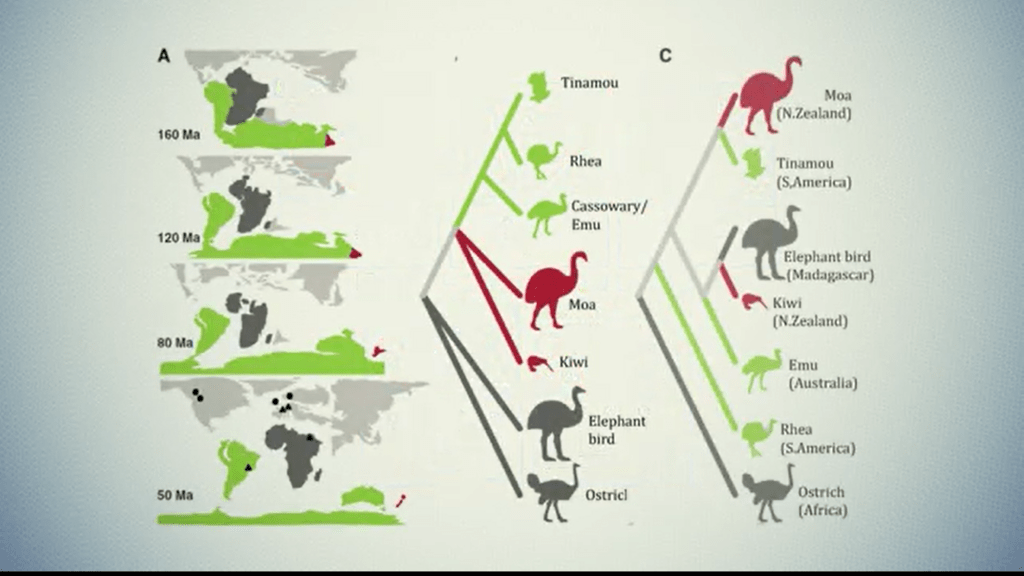
Based on the biogeographic vicariance hypothesis of ancestor of ratite birds was present a widespread in Gondwana during the late Cretaceous. As the supercontinent fragmented due to plate tectonics, the ancestor floated with the fragments to their current positions,and evolved into the modern present today.

We are talking aboutthe distribution of biodiversity. On a global scale,we have two gradients of biodiversity, the latitudinal gradient, andthe altitudinal gradient. The latitudinal gradient states thatbiodiversity is higher in tropics and degrees moving upwards and downwards or polar-ward. It means that we havea peak of biodiversity in the middle along the equator andthen these curves moved around the poles.

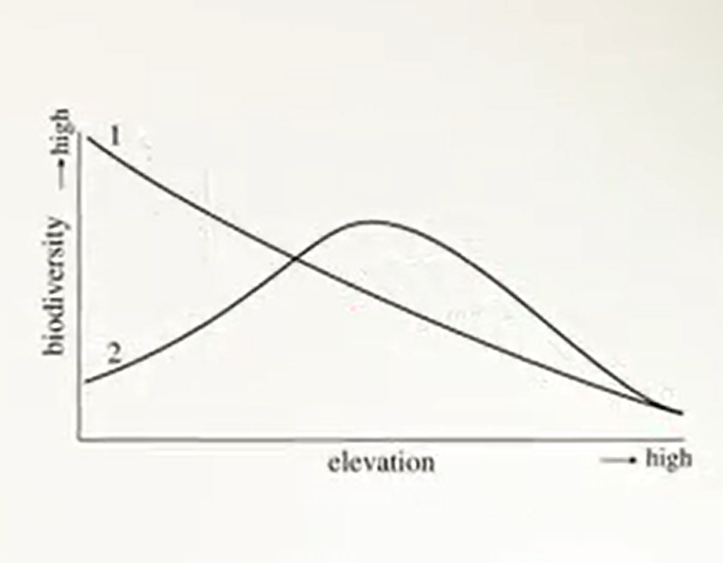
Other theories instead suggest thatbiodiversity decrease along a latitudinal gradient. Elevational diversity gradients says that species diversity tends to increase along the increase of altitude, and then there is a limit when this species diversity doesn’t increase, so we have a kind of up-shaped curve.
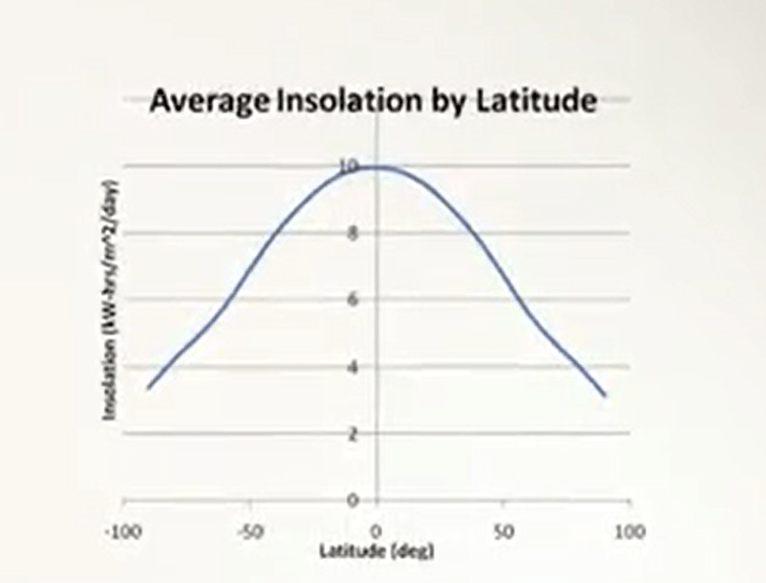
There are some supporting theories about these two gradients. About latitudinal gradients,we have the species energy theories. These theories just try to explain that because of the amount of energy at the equator is higher than poles, also species diversity is higher there. But this theory has a problem. The main problem is that more energy doesn’t mean there are more species, it can just mean that there are more individuals of the same species.
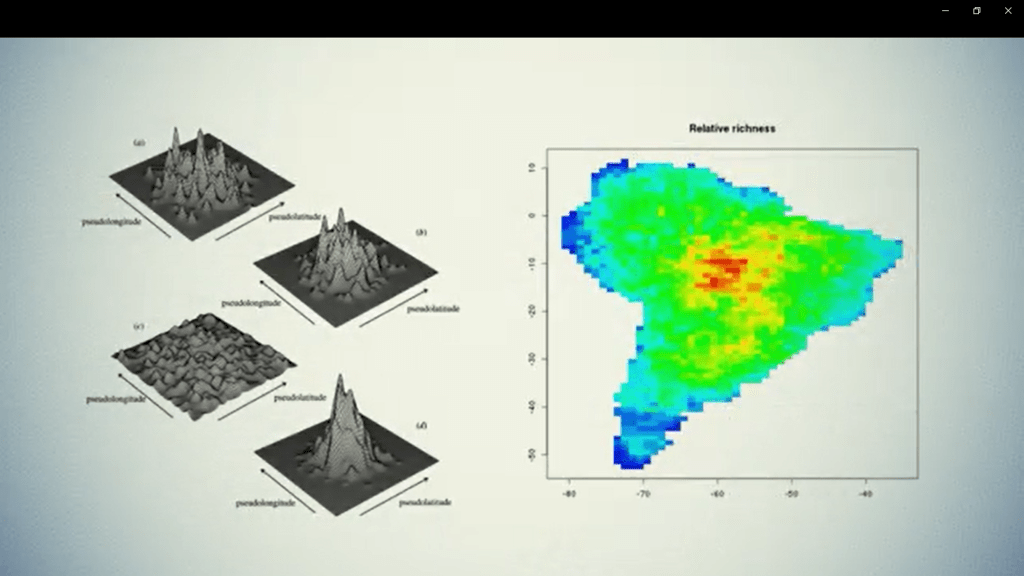
At the same time also elevational diversity gradient as a supporting theory. This is called the mid-domain effect. This theory simply saysthat because species tend to dramatically concentrate inthe center of the area where they are, the number of species in the centerof each place is higher. So it means because the equatoris the center of the world, there there are the most species.

The distribution of biodiversity on planet Earth is one of the most interesting questions in ecology. Scientists try to explain this pattern with different theories and hypotheses. Biogeographical and evolutionary theories have been suggested to explain this latitudinal gradient. We have hypothesis of the environmental and geographical stability. The hypothesis of the velocity of speciation. The glacial refuge theory. The hypothesis ofthe geological instability. And the hypothesis ofthe riverine barriers.
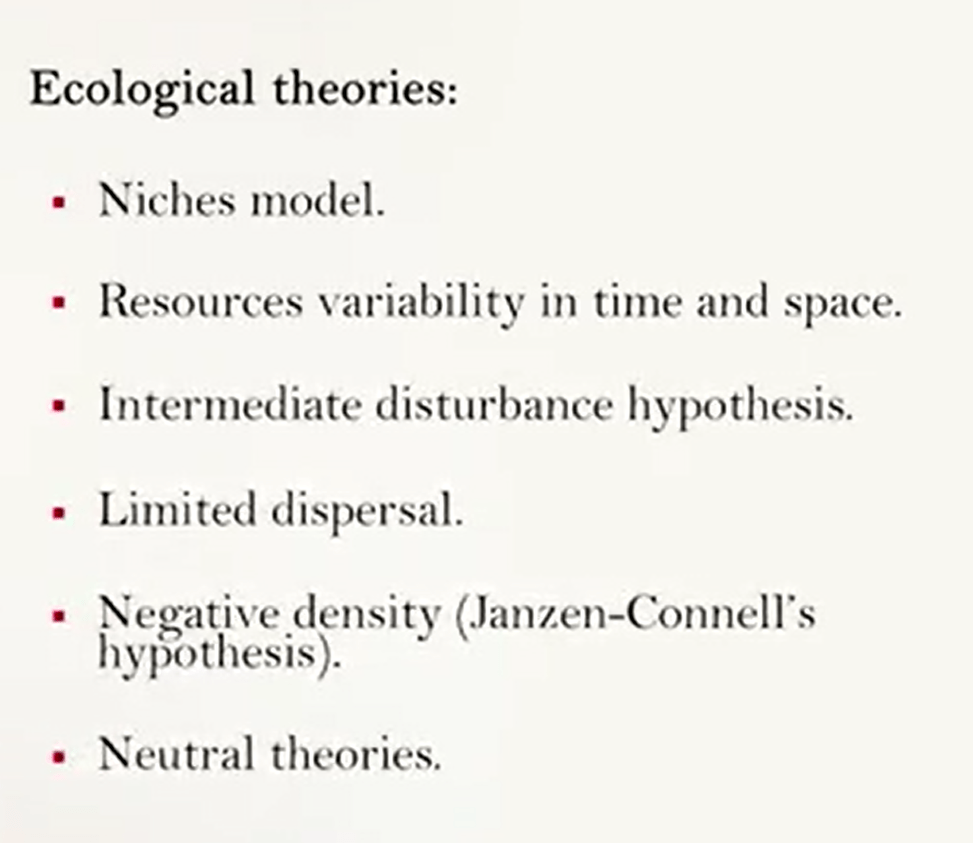
Also ecological theories have beenproposed to explain this latitudinal gradient or biodiversity. Niche models have been suggestedto justify this pattern. Also resources variability in time and space has been invoked. Intermediate disturbance hypothesis,limited dispersal, negative density, socalled Janzen-Connell’s hypothesis. And neutral theories have been all proposed to explain these patterns.
But not one of them can completelyjustify why there is this latitudinal gradient of biodiversity. Recently some author suggested that changes in beta diversity which is diversity changes along time and space is caused by the simple changes in the size ofspecies pool, such as gamma diversity. But these differences inlocal assembly processes, are not the causes of latitudinal or altitudinal patterns. So the variation in biogeographic processes that set the size of the species pool, is a more plausible explanation. Climate, instead this idea influences netprimary productions in such a way that by raising or lowering the available bio-mass and so increasing, decreasing of the number of individuals, it controls the number of species. But the problem is that it’s not biomass that increases the number of individuals that increase the number of species.
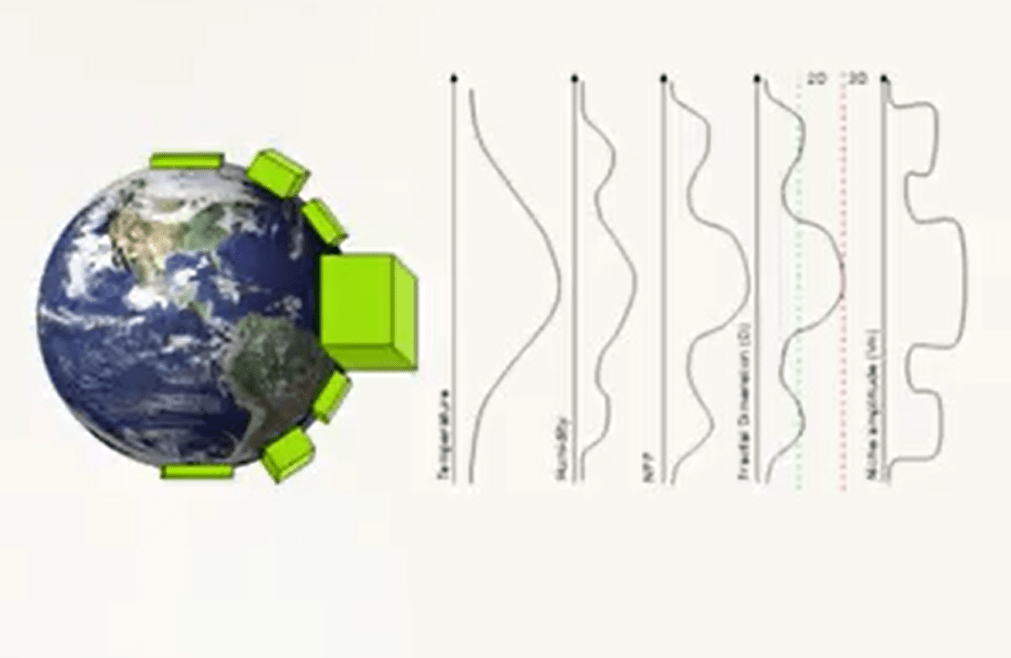
So recently I proposed the idea that biodiversities like a cauliflower under the sunlight. It means that the size ofan ecosystem niche is relevant to the amount of biological species that are present in an environment. So the size of the environment or niche depends on temperature, humidity, net primary production. And when this volume is big, more species can live there. This means that because on the poleswe have smaller volumes on environmental niches, the number of species there is lower. At the equator we have a bigger volume, and this means that more species cancoexist in the same environment.

So biodiversity’s a kind offractal cauliflower where each branch represents a species. A species allowed through facilitation the arrival of the other species until they reach the limit imposed by ecosystem volume.
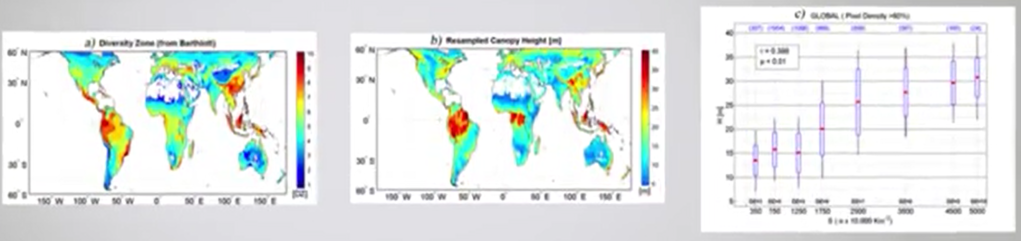
Last year we also suggested the idea that latitudinal gradient depends on the hypervolume of the ecosystem, it means that we verified how canopy high influences biological diversity.

So, we tested the hypothesis over globalcorrelation between forest canopy high, as approximal force volume,and vascular reaches. Our results showed the positive global correlation that follows our altitudinal gradient, and is valid withinthe measure of macroclimate zones. That’s all for today, we will continue to explore the ideas about the distribution of biodiversity during the next lecture.
 Mathieu GT
Legg igjen en kommentar