Welcome to the third lecture of mycourse in biological diversity theories, measures and data sampling techniques. Today I will tell you about the evolution of biological diversity.

First of all we need to clarifythe rule of predators and parasites on the evolution of biological diversity. Speciation takes a very important rule of course in the evolution. Predators may have played a very bigrole in shaping biological diversity. They can really push the speciation events with an effect that iscalled top-down effect.
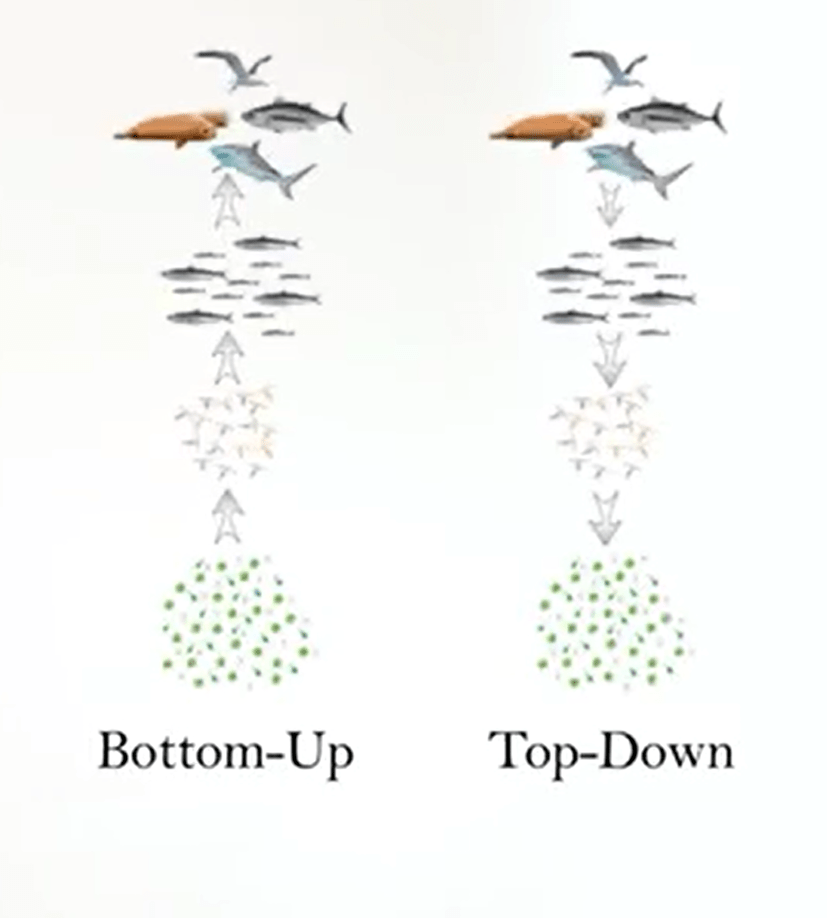
So we have these two type of effects,the top-down and bottom-up. Top-down effect is the effectplayed by predators, which shape the lowerlevel of the food chain. And bottom-up effects is that sidethat is playing in the opposite side. Bottom-up effect is calledcontrolled by resources. For instance light, food, energy. And this effect is from the bottom-leveltowards the upper level. So it starts from primary producerto herbivores towards predators.

These effects are very important because they move up and down along the food chain.
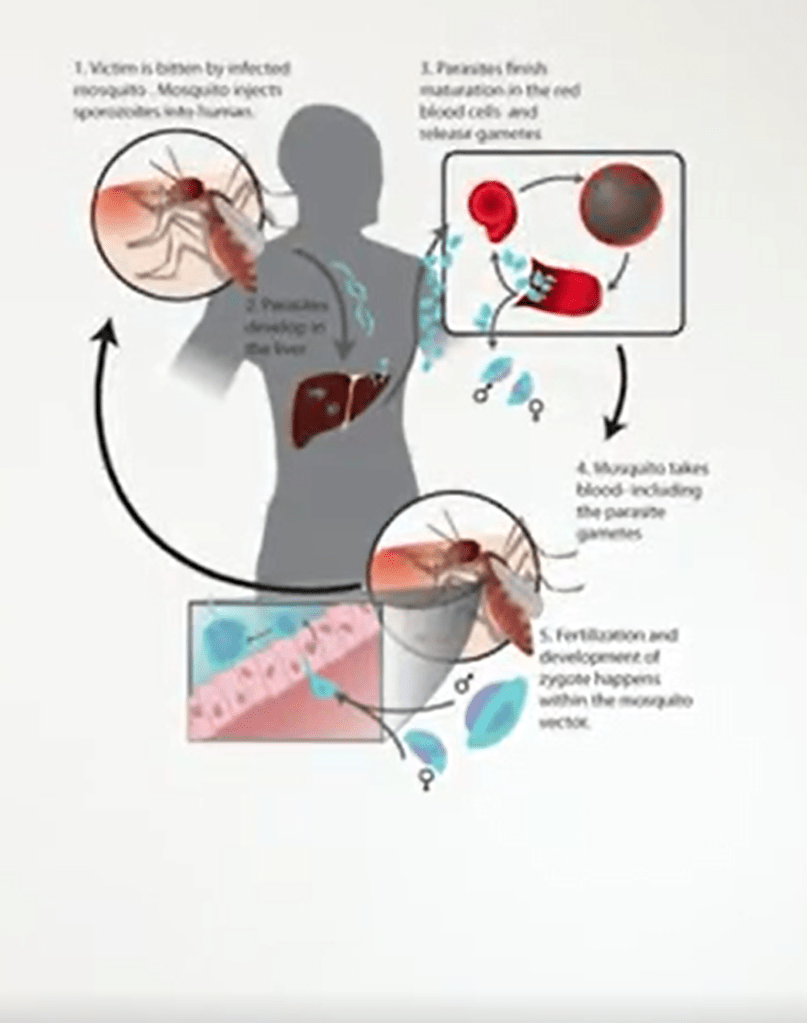
Another important element in the evolution of biodiversity is parasite. Parasites plays veryimportant role in speciation. They can address the speciation events just by managing the population abundances. In this case they manage host abundances. So for instance, the sickle cell anemia shaped human evolution because some population has different blood cells so as this kind of sickle cell. And in this case, they can prevent the attack of parasites for instance, mosquito carriers.
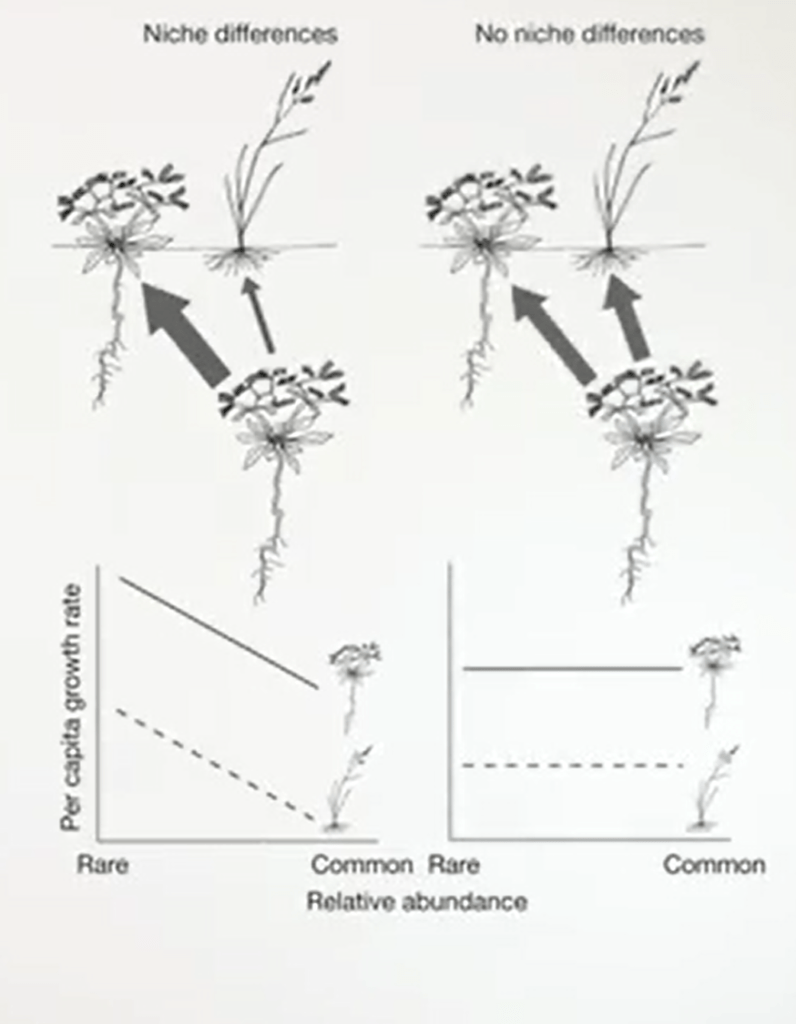
o, parasites also plays very important role in evolution of biodiversity. In 2009 a paper published in Nature by two authors, Levin Ale, Reese Lambert argued that niches are very important in maintenance of biological diversity, also in species diversity. In this way, they challenged the neutral theory of biodiversity. This study, like many others, does not take into account the effect of history on biological diversity. To have a better picture and to understand the evolutionary dynamics of biodiversity, we need to consider the biogeographic and phylogenetic approaches. also geological, evolutional, and ecological dynamics in the context of natural history are very important to understand how biological diversity can be created. This study in nature suggested that niche differences, including variation in the rooting that cause species to limit their own individuals more than they limit the competitors.
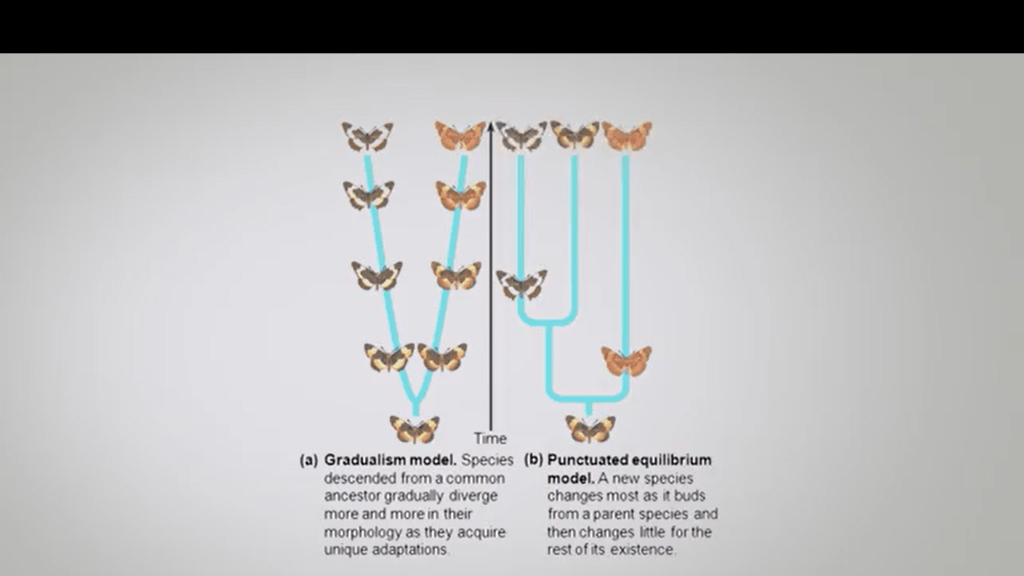
Another important point in the evolution of biodiversity is the debate about the gradualism against punctuated equilibrium. Stephen J Gould and Niles Eldredge suggested that evolution moves according to punctuated equilibriums. It means that there is nothing gradualin the pattern of evolution and speciation, but species evolve in a jump. So they just evolve after stable point, stable periods. Once species appear in the fossil records, they can stay in a stable equilibrium forlong time. It means that we can have two different speciation types. The first one is gradual movement towards the evolution and the second one is jump over the evolution. According to Gladwell’s model, species descends from a common ancestral and gradually diverge more and more in their morphology as they acquire unique adaptations. Instead, the punctuated equilibrium proposed by Stephen Jay Gould and Niles Eldredge, say that a new species change most as it pass from the parent species, and then change little forthe rest of their existence. So we have this kind ofjump in the evolution. Is something that Darwin already proposedin his famous picture in his notebook.

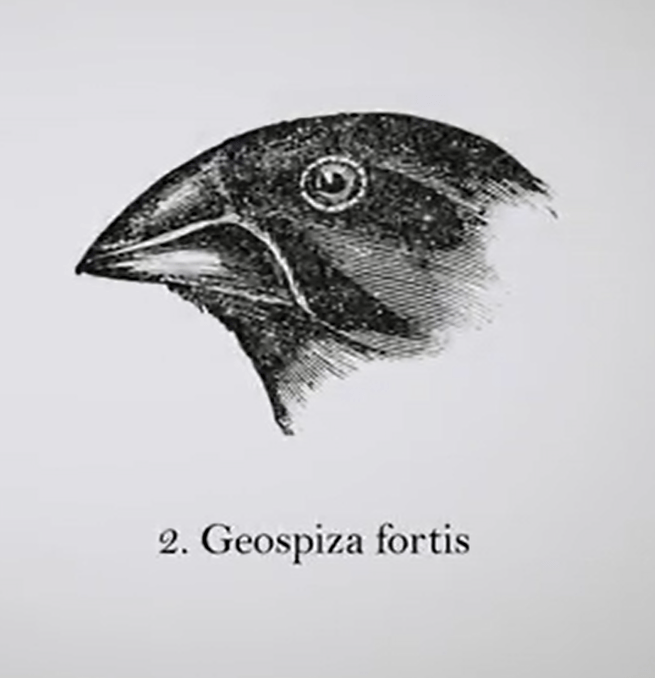
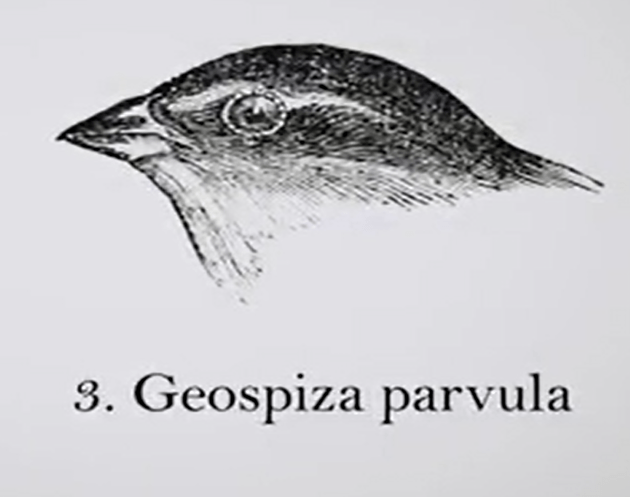
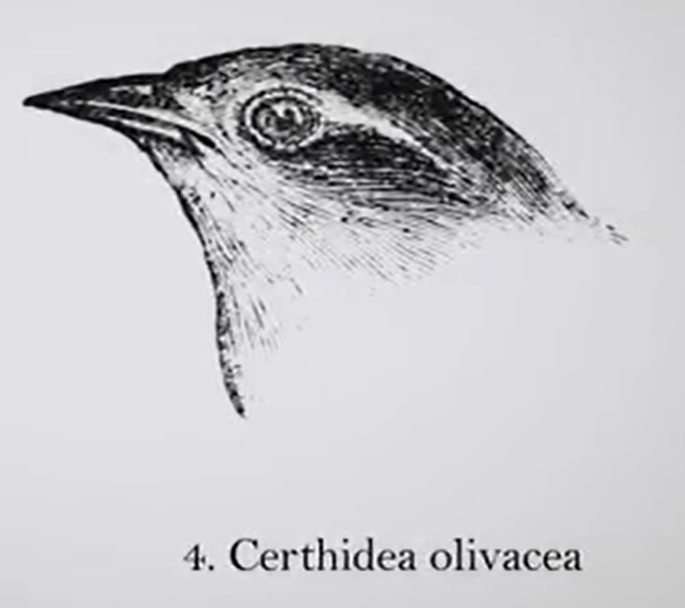
Two other very important mechanisms in theevolution of biodiversity are phenotypic plasticity and character displacement. Phenotypic plasticity is the ability of the genotype to produce more than one phenotype when exposed to different environments. It’s that character displacement issomething that has been started since the time of Darwin. For instance, David Black used data collected by Darwinabout finches in Galapagos Islands and he understood that these differences inbeak shape make differences in behavior. It means that these species on eachisland can change their behavior. In this way, they can select different food resources and this way they speciate.
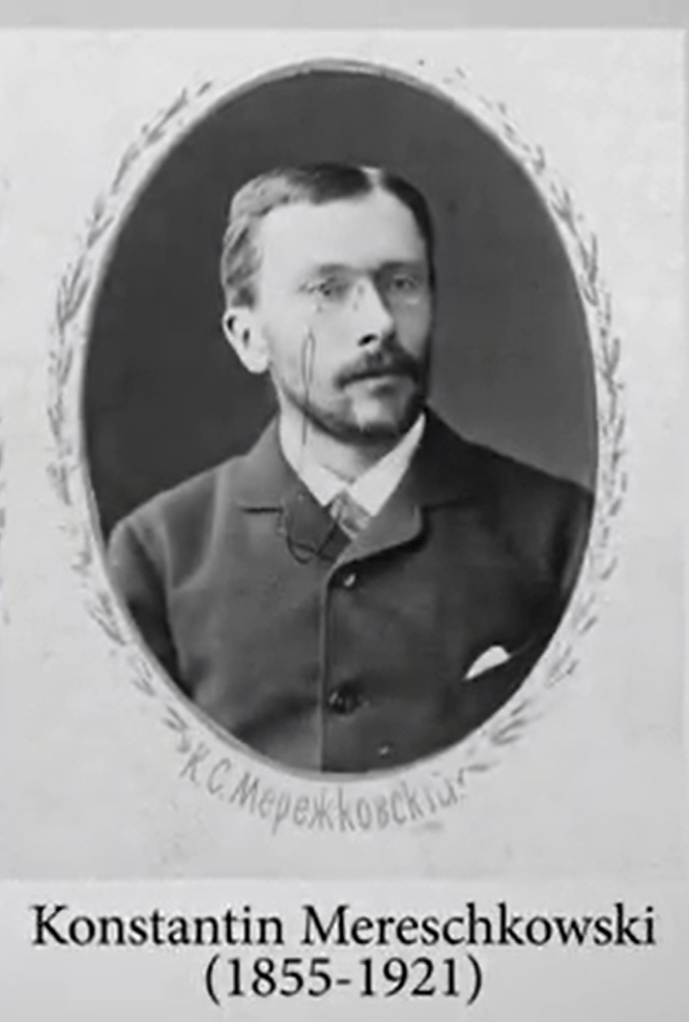
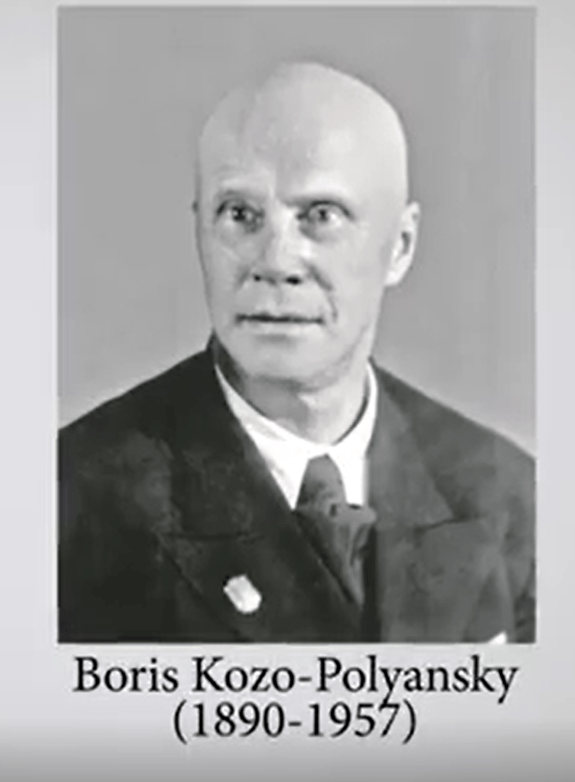
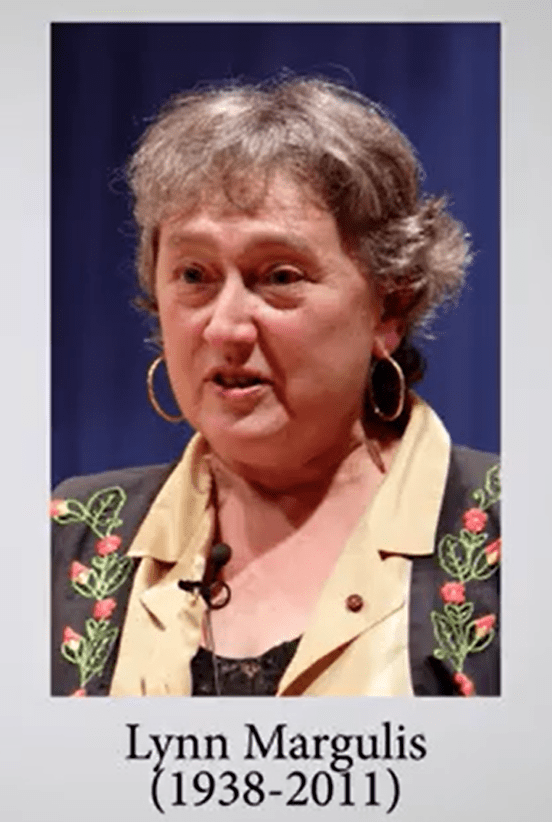
Endosymbiosis was proposed as important mechanism in the evolution of species diversity. The endosymbiotic theory was firstly articulated by the Russian botanist Konstantin Mereschkowski. And then was again proposed by another botanist, a Russian botanist, Boris Kozo-Polyansky. The endosymbiotic theory was advanced andthen substantiated with microbiological evidence by Lynn Margulis in 1967 papertitled On the Origin of Mitosis Cells.
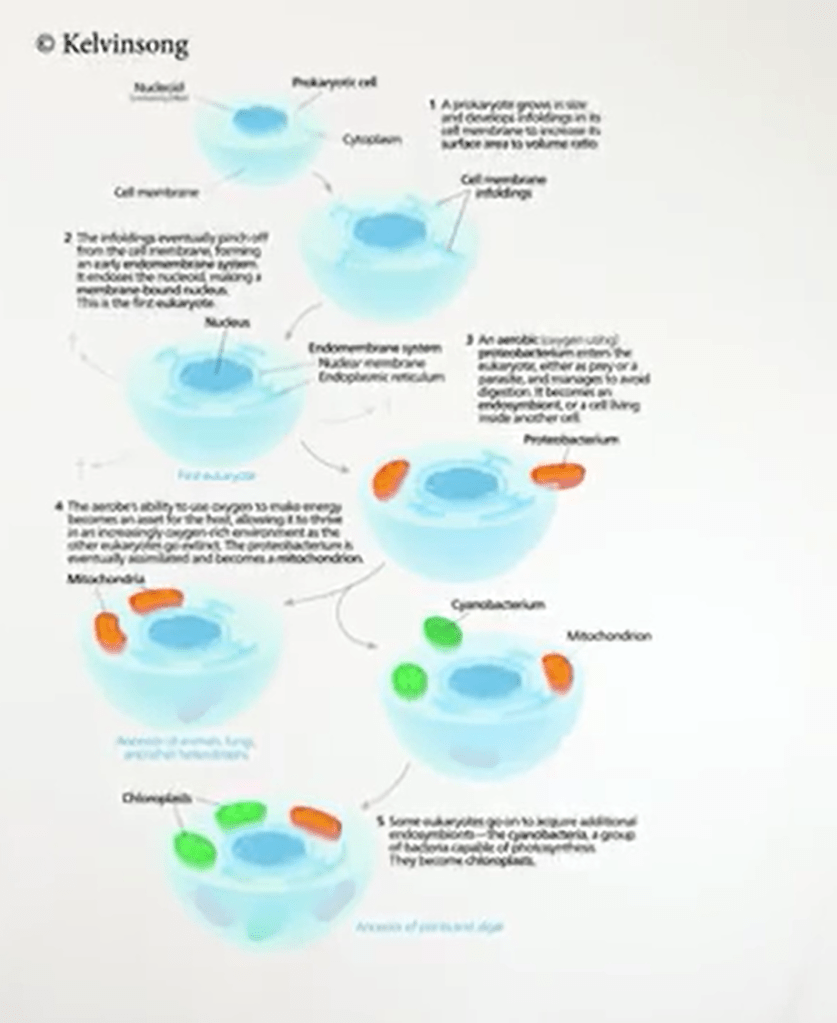
In her work published in 1981,titled Symbiosis in Cell Evolution, she argued that akaryotic cell originated as communities of interacting entities, including endosymbiotic that developed into flagella and.
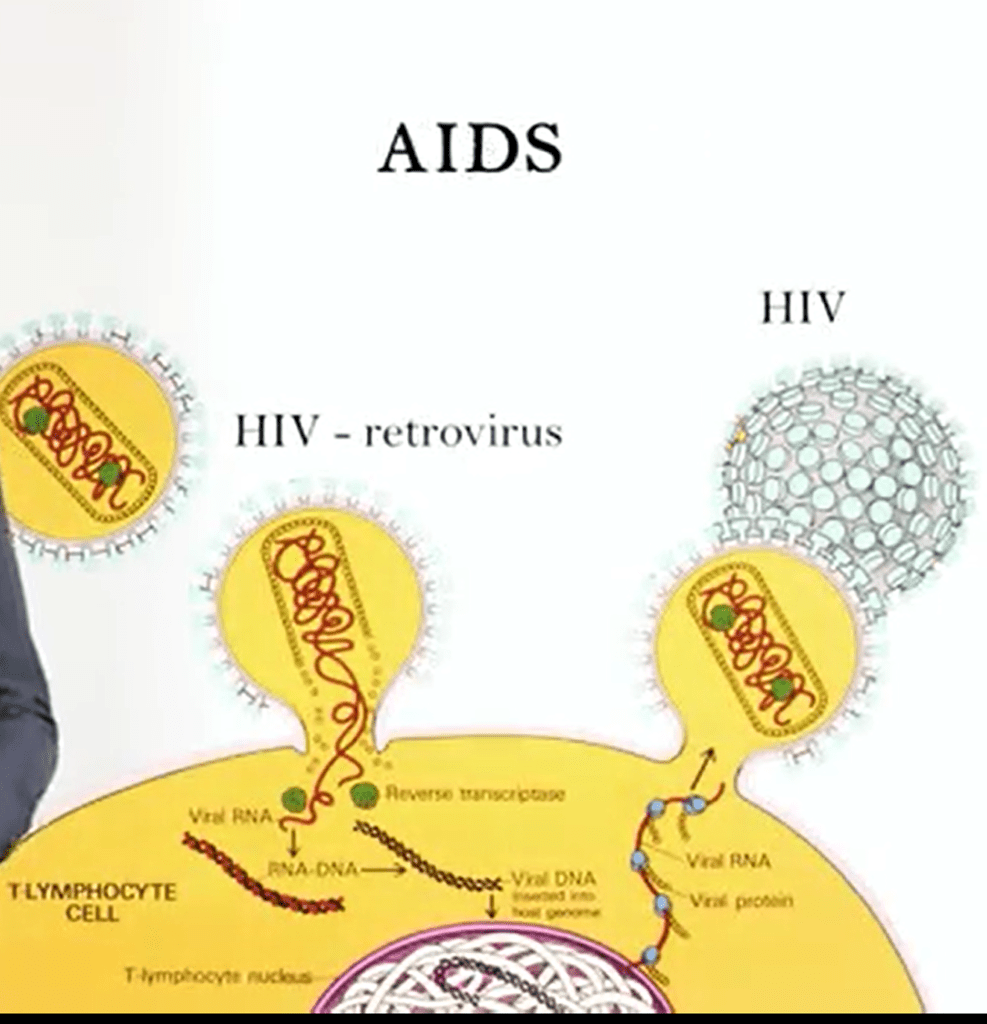
I recently suggested that,apart from endosymbiosis, another mechanism is very important. That is called symbiosis, it means that genes carriers can introduce inside the cell, it can integrate completely in the genome of these cell. So in this way, they share part of their own genetic material.
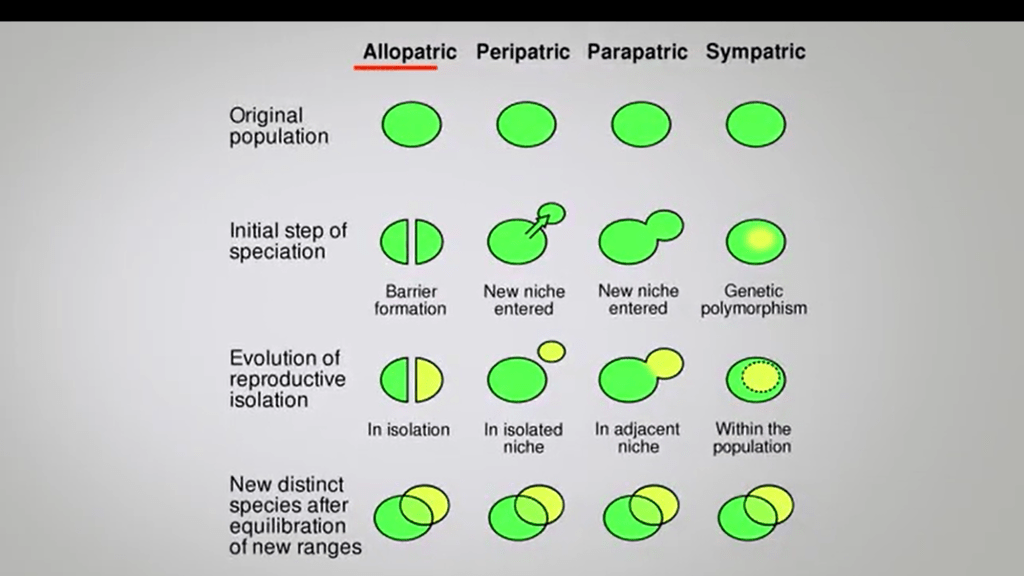
Different kind of speciationare being recognized. The first one, allopatric speciation takes place when the barrier grow for instance rivers, mountain chain. And they split to population into meta population that can evolve just because of this allopatric differences. So they are in two different place, they are isolated andthey can evolve in this way. Peripatric speciation is a different kind of speciation that takes place when this simple meta-populationmove in another niche
So in this way, this population is isolated from the original population, but, they have kind of contact until they completely split.
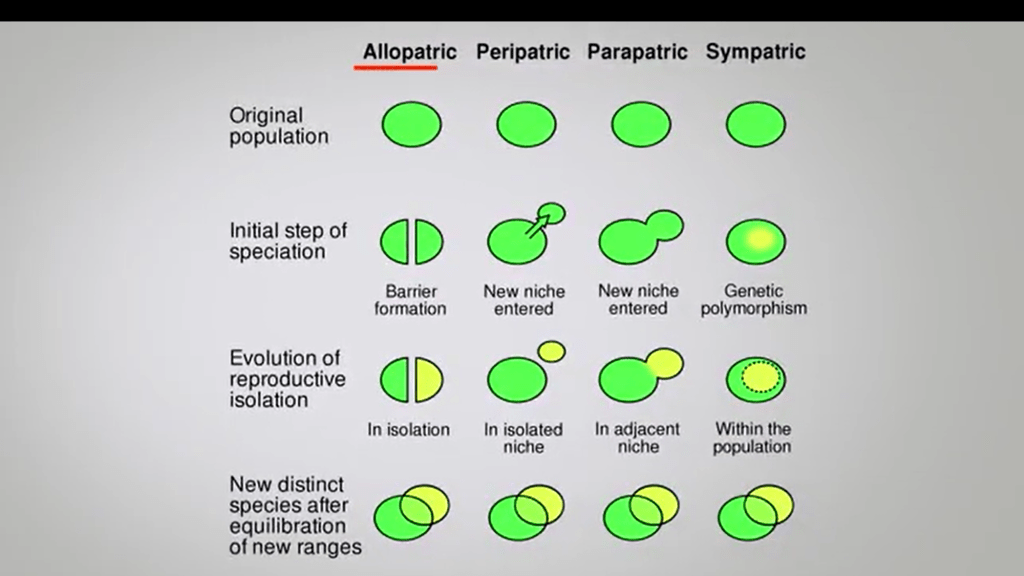
The parapatric speciation instead continues to keep these two populations in contact. So it means that there is a kind of gene flow between them. The sympatric speciation instead isa kind of speciation where the population evolve insulated, but together inthe same place, in the same environment.

So there is not a physical barrier that divides them. Not a special division, but this population can completely divide in two different species even if they live in the same environment. In this speciation process, different elements plays key role. Founder effect is the effect when few individuals of one population move in another empty space. So they just move ina completely isolated space. In this case, they can evolve a new species. So just slightly increasing differences in characters.

Bottleneck effect happens when there isa catastrophic reduction in a population. It means that genetic viability is reduced. And the resulting population has less viability in their genotypes. This is a genetic drift.
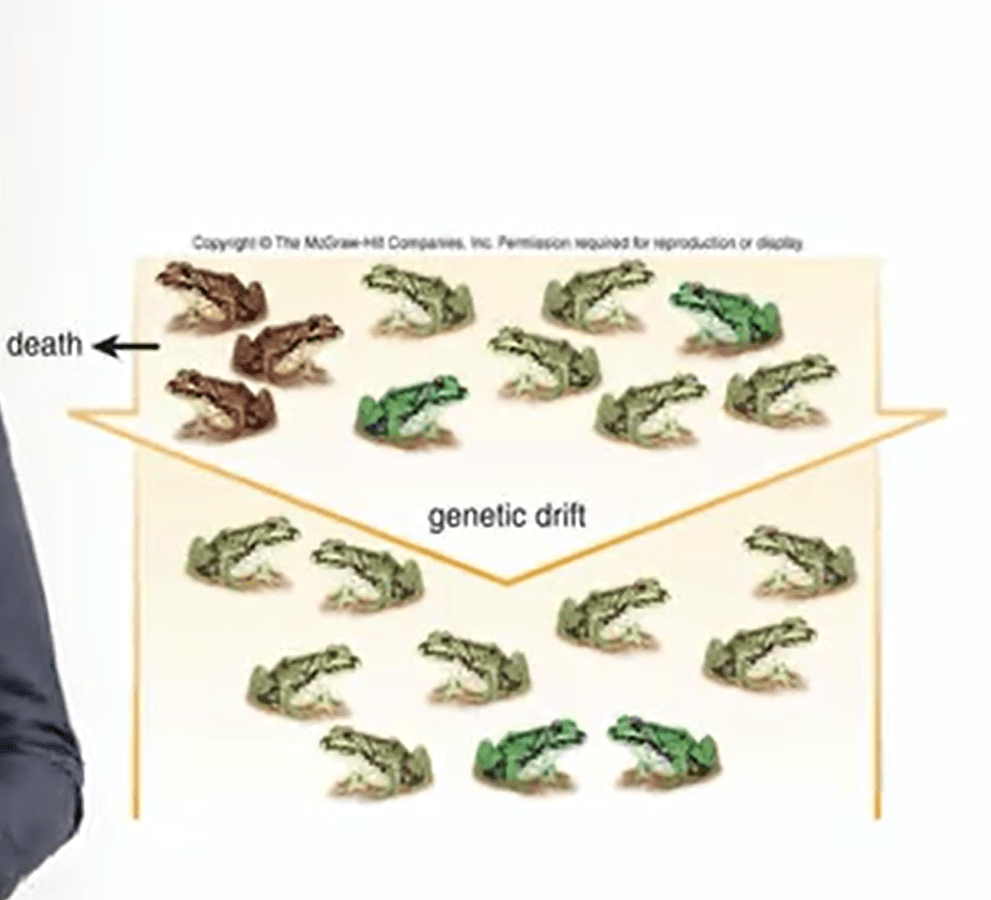
In this case,the reduction of population, so the number of individuals inthe resulting population, is very low. So it is the number of gene.
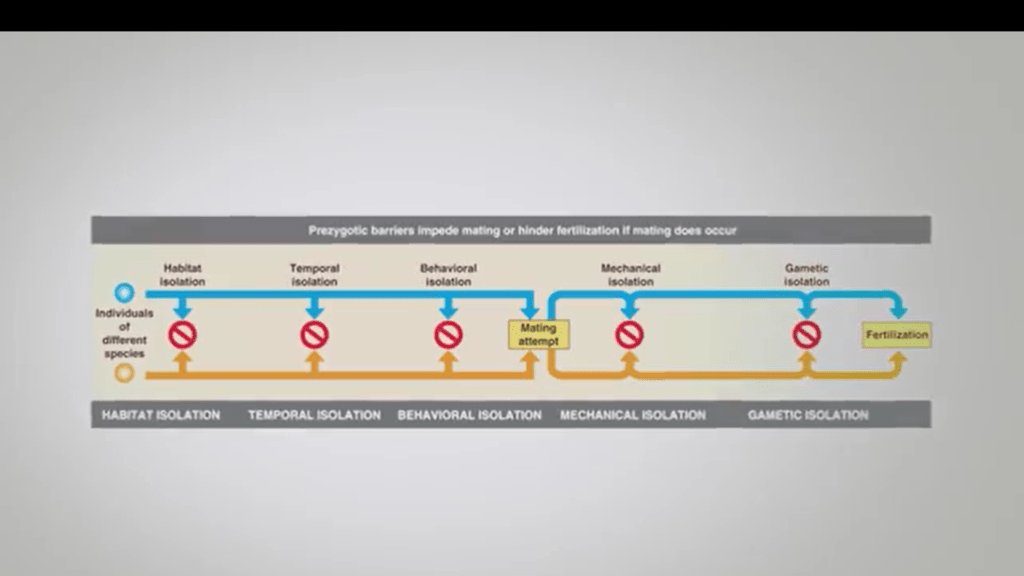
There are prezygotic and postzygotic barriers that divide species. Prezygotic barriers prevent species forinter breeding for each other.

And postzygotic barriers happen when species are able to reproduce but they produce offspring that are not fertile, that cannot be selected by natural selection.
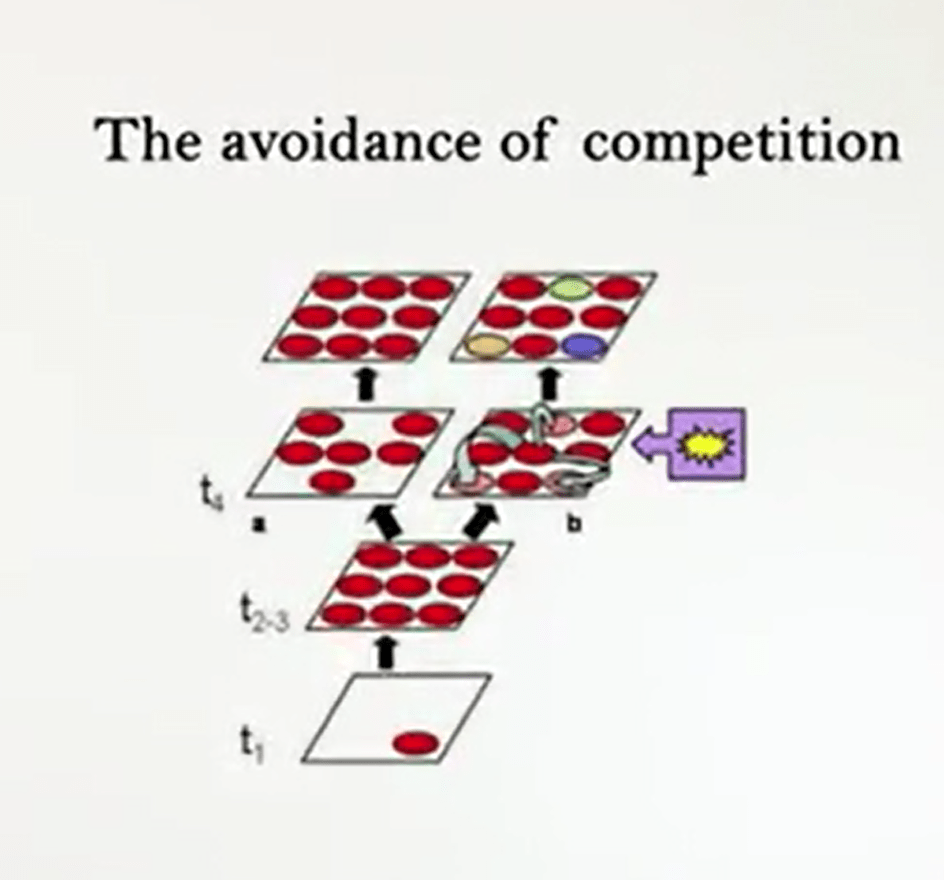
An important mechanism inshaping biological diversity is the avoidance of competition. An empty space due to cyclic variation of population around the carrying capacity is filled by individuals of the same species with mutation that allow them to adapt, but not evolve in different species. But with endosymbiosis andsymbiosis and phenotypic plasticity, some polymorphic metapopulationcan evolve in different species following the principle of the avoidance of competition.
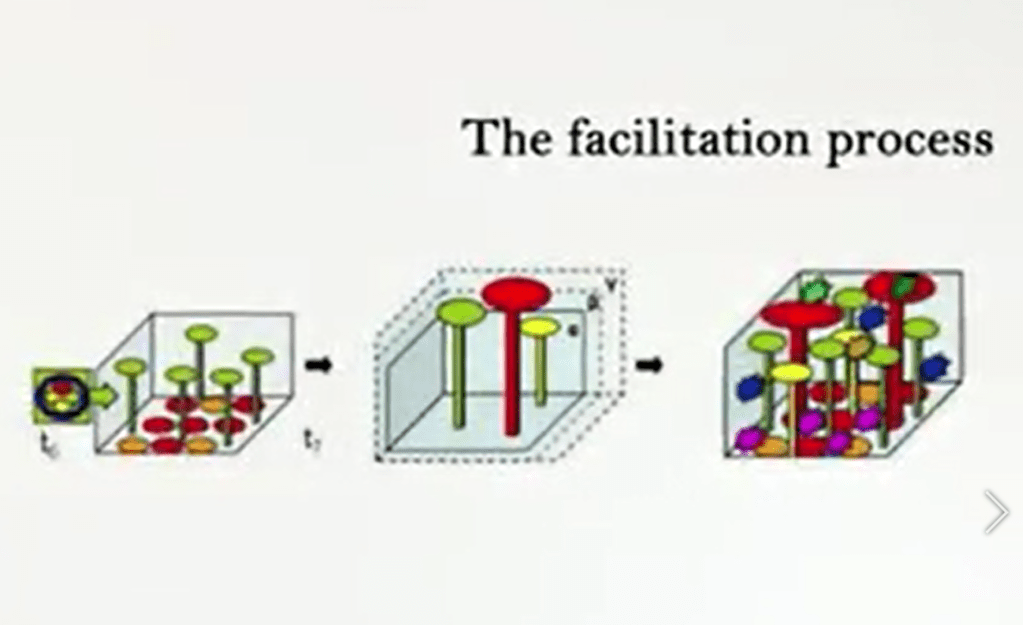
All these process are summarizedin the idea of facilitation. Facilitation is something thatwas suggested by many authors and I recently suggest in the biodiversity related niches differentiation theory. As suggested by this theory,the exploitation of 3D space and the species facilitation allow the increase of niche. And in this way, this niche space enhance the number of species that can fill the ecosystem. So co-evolution is the evolution of one species triggered by the evolution of the associated species. For instance, Darwin noticed that anorchid in the tropic as this very long and he suggested there would bea moth with a very long tube that can fertilize this species. So this is a kind of co-evolution, so it’s one species thatpushed the other to evolve.
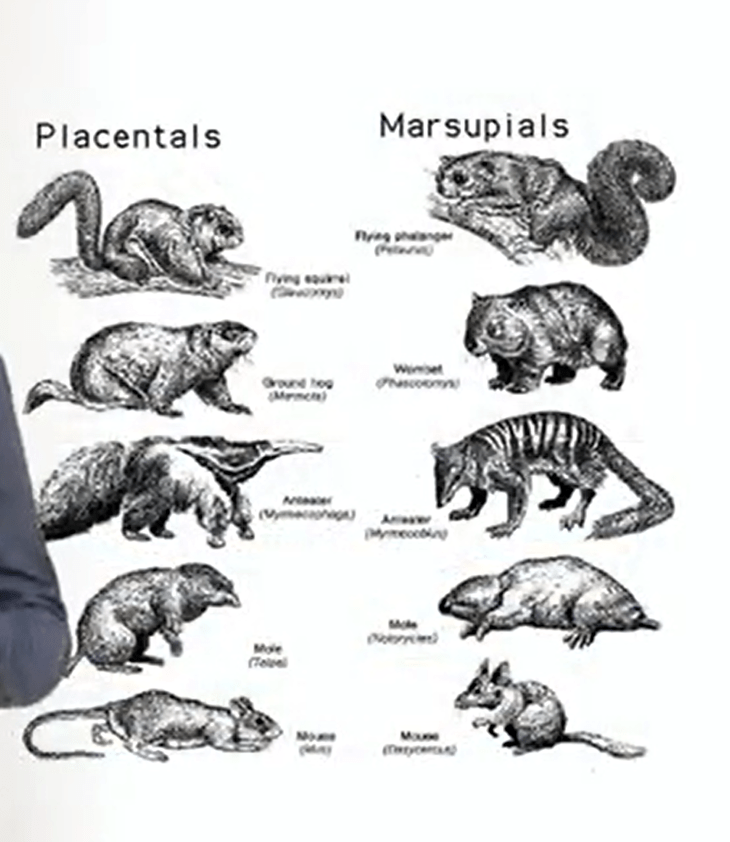
Parallel evolution is something verysimilar but it means that species, even if they are in different space, in different region of the world,evolve in the same way. So this is because they adapt to very similar conditions. Scientists try to understand the evolution of biodiversity adopting different systems. For instance, they try to model the evolution of bio diversity. They even adopt the game theory.

In this system, there are two different species, one that is very strong, and another one that is weak. So one that is competing species, and another one that is cooperating species. So we have recipient and donor. And another system the scientist adoptin the game theory to understand the evolution of species was this couple system of two species, hawk, dove. And they understood then species diversity can evolve when this system is stable. It means that there are evolutionary stable strategies that allow two species to coexist in the same environment. So that’s all for this lecture. See you in the next one.
 Mathieu GT
Legg igjen en kommentar