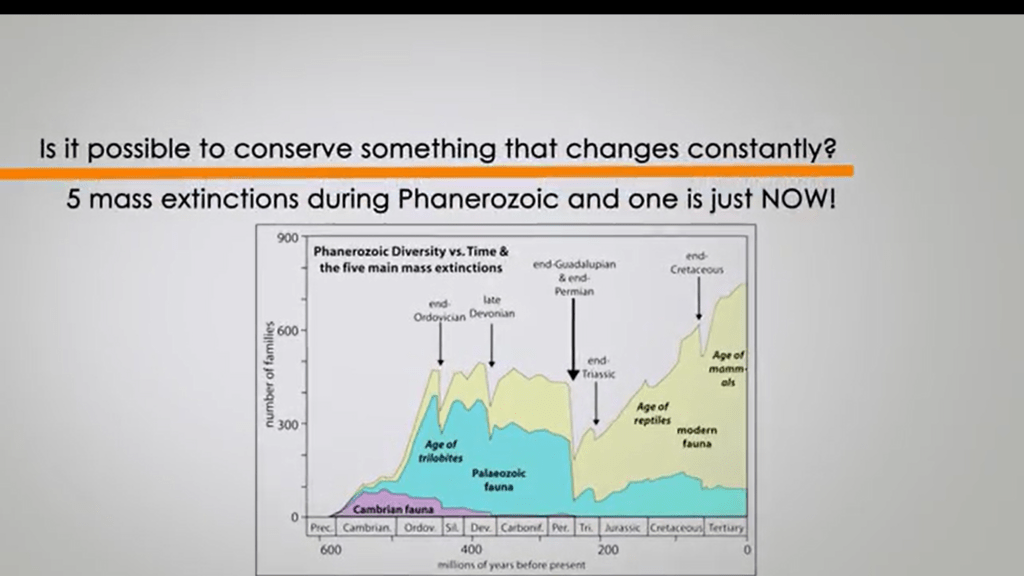
I’d like to begin this lecture with a question for you. Do you think is it possible to conservesomething that change constantly? I mean, there have been five mass extinction during Phanerozoic, and one is happening just now.
autocatalytic domino effect
Extinction increased because ofautocatalytic domino effect.

and this is due to the presence of keystone species. Keystone species are species thatare able to build the ecosystem. So when one keystone species became lost, become extinct,all the ecosystem is damaged.
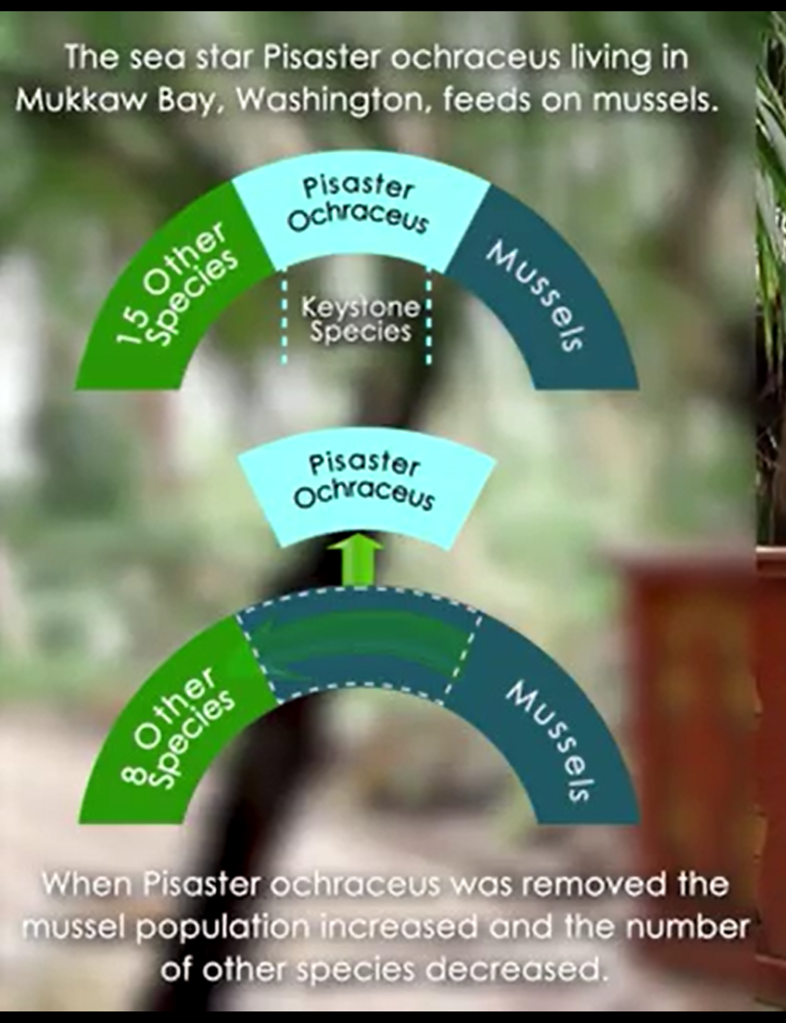
The star fish is Pisaster ochraceus isa keystone species in the interdata marine environment of North America. This species feeds on the mussel Mytilus californianus. When scientists removed this keystonespecies from the environment the mussel population rapidly increased. And this explosion completely excludedall the other species in the ecosystem. This is why the presence of keystone species and the interaction between species allowed the presence of biodiversity.

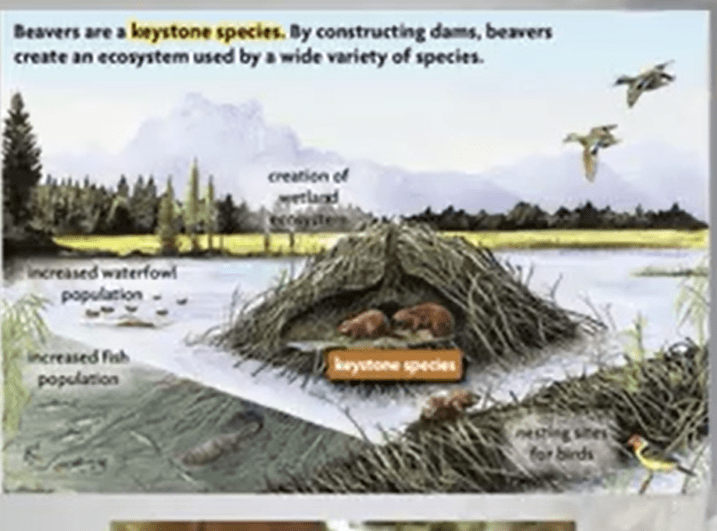
Another example of a keystonespecies is beaver. Beaver plays a very crucialrole in biodiversity. Thanks to the dam they build and the pond they create,many other species can survive. This is why they protect the web lifeupon which all the ecosystem depends.
I wanted to give you a provocative idea. Should we consider the evolution,the original species, or the maintenance of them? I mean, consider the book of Darwin,which title would be more appropriate? The Origin of Species by means of naturalselection and the preservation of favoured races in the struggle for life or the maintenance of species by means of adaptation and the preservation ofthem by avoiding to struggle for life?

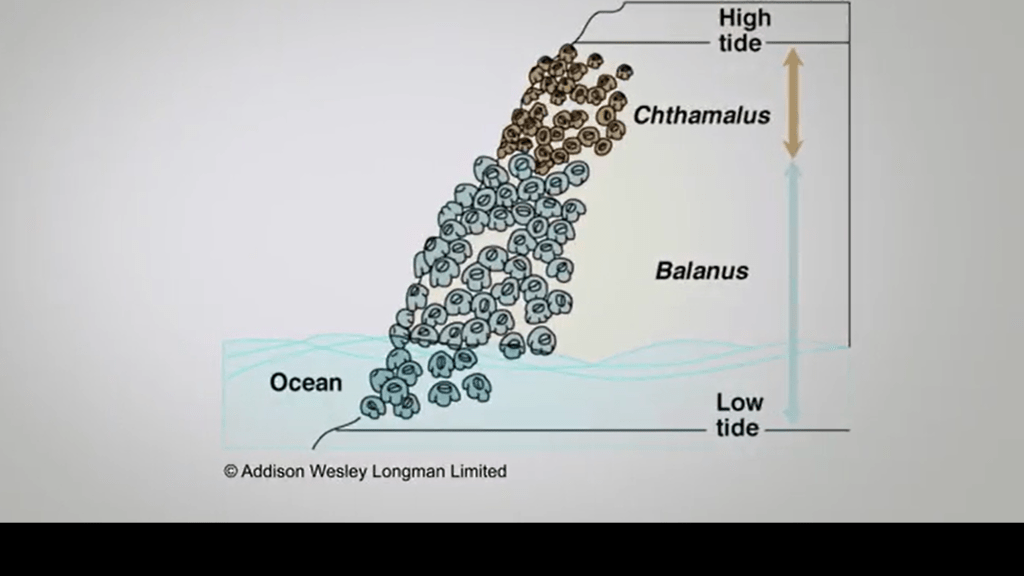
The struggle for existence proposedby Darwin was formalized by Gause’s competitive exclusion principle. This principle states that if twospecies share the same niche, only one of them can survive andthe other one would be excluded. Gause Competitive Exclusion Principlewas tested in laboratory, with only two paramecium species.

Indeed, this principle has neverbeen observed in real nature. This is why in ’98, Connell proposedthe idea of close competition past as a possible reason forobserver differentiation in niches. Competing species can be less fit than species which avoid to compete.
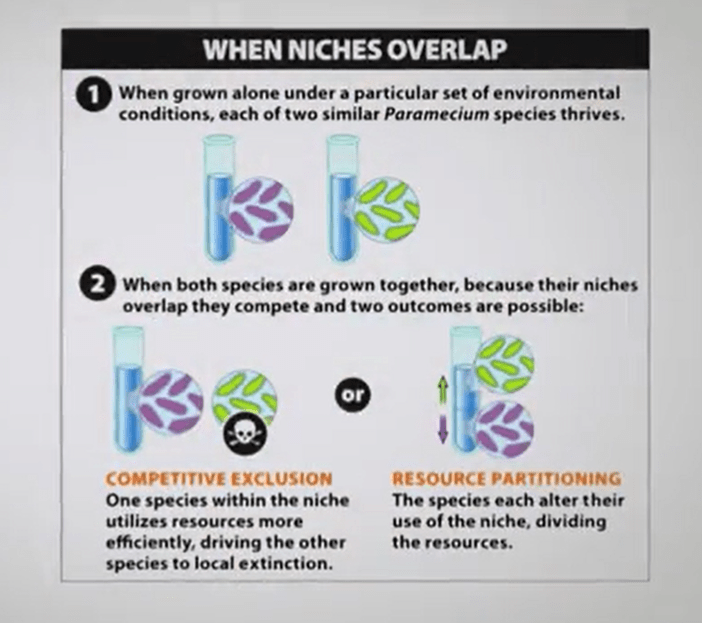
Natural selection can thenfavor non-competing species. Their population can increase andthose of competing species decrease. The current differences in each we observeare thus the result of past competition.

At this point we need tospecify what is a niche. The Hutchinsonian nicheis an n-dimensional hypervolume where all dimensions are environmental conditions or resources. And this condition createsthe space where a species can live.
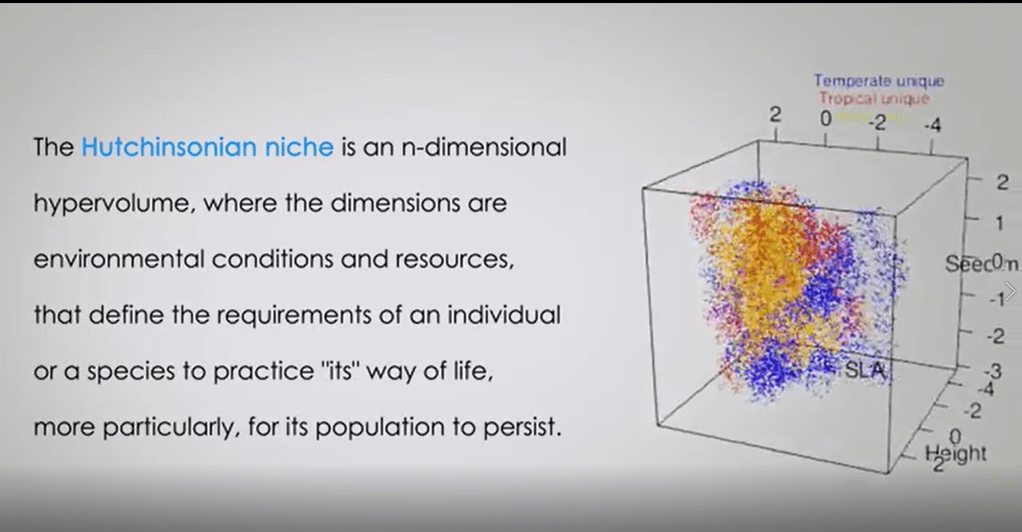
The hypervolume define the multi-dimensional space of resources such as energy,nutrients and structure. These resources are available toall the organisms of that species.
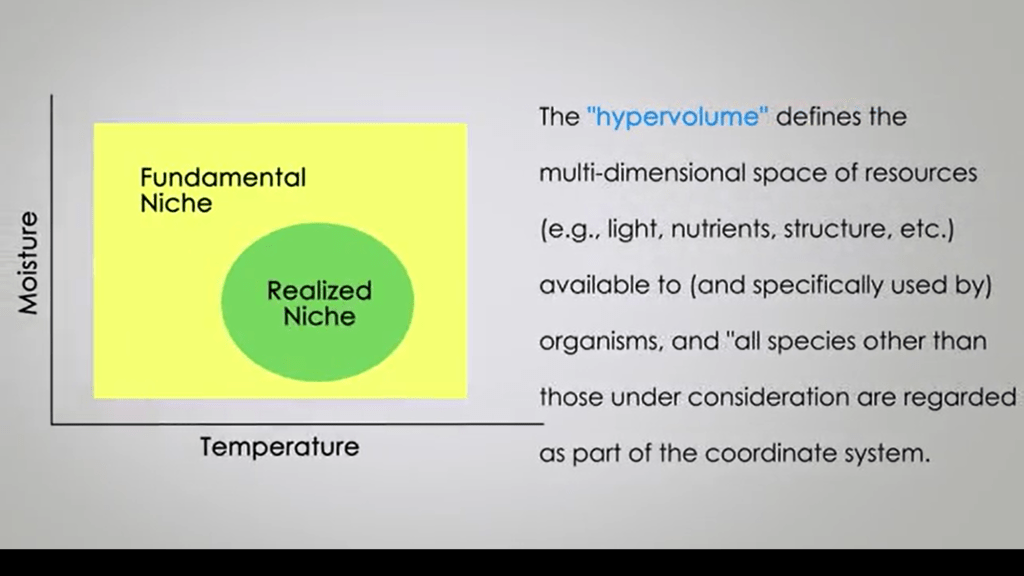
So does biodiversitycome from competition? We know that the Interspecific competition reduced the number of species becauseof competitive exclusion. But at the same time,Intraspecific competition increased the number of speciesbecause of carrying capacity. This also happens to human beings.

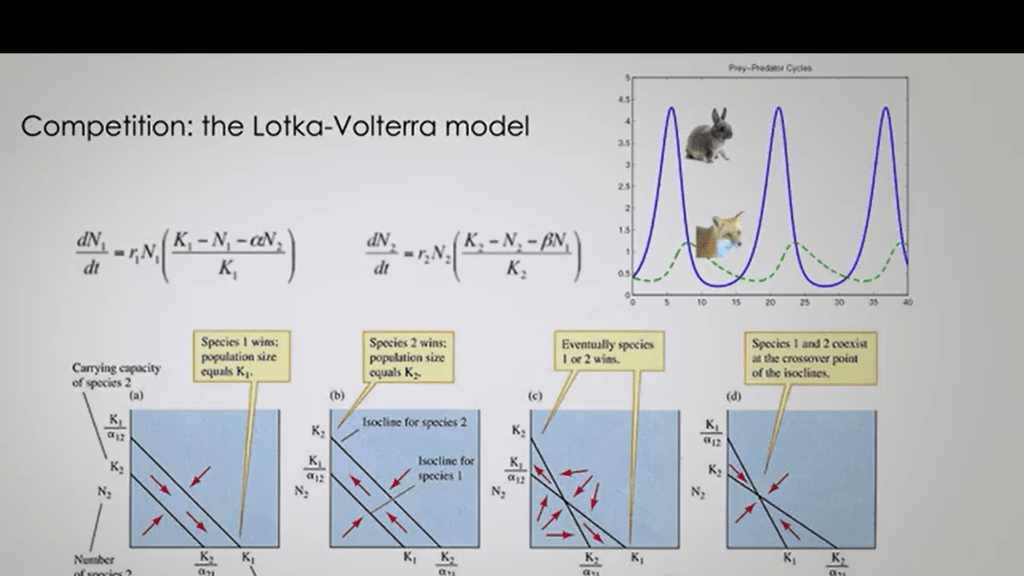
In an attempt to clarify competition,Vito Volterra, James Lotka developedthe model of Competition. This model asks two questions butthis very simple model is oversimplified. These are linear module,it accounts only for two species but nature is much more complicated.
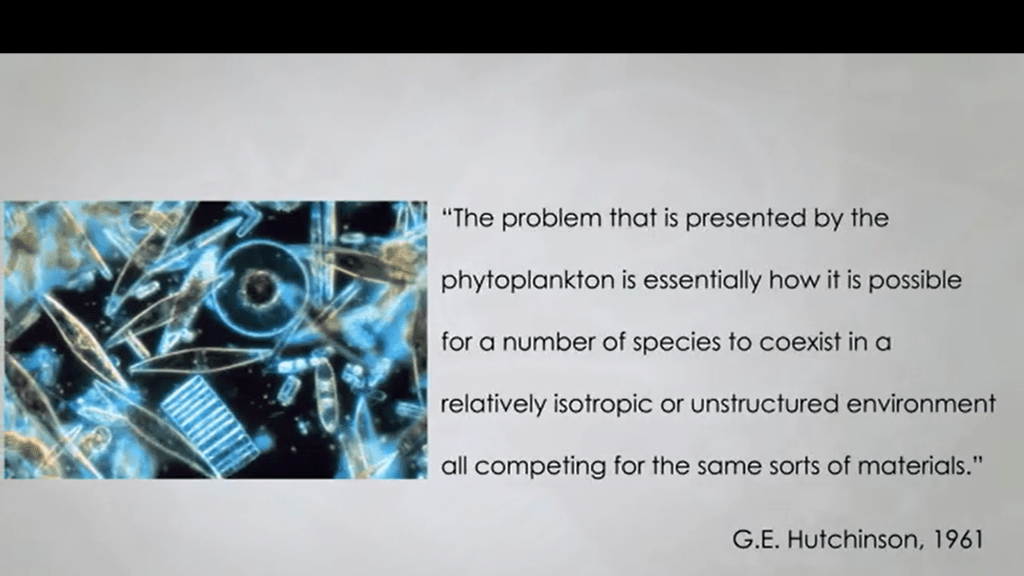
Not convinced bythe competitive principle, in 1961 ecologist Hutchinson suggested the paradox principle. The problem, he wrote, that is presentedby the phytoplankton is essentially how it is possible for a number of species to coexist in a relatively isotropic or unstructured environment all competing for the same sort of materials.
Species are filed under differentsets of environmental condition. This is why if the environment changed sufficiently during time, no competitor can remain superior toexclude the other species for a long time.
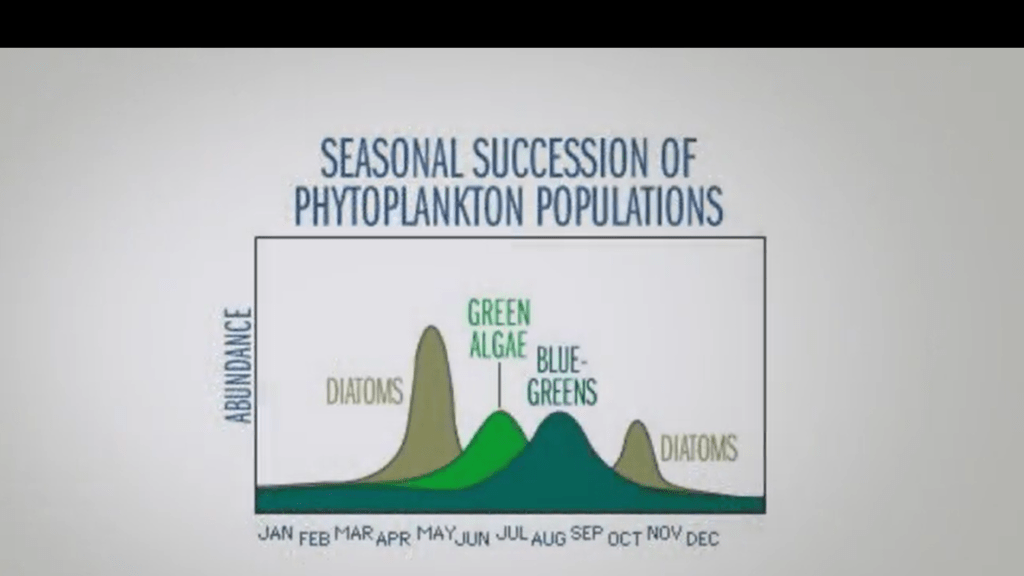
And what happens ifenvironment doesn’t change? Two mechanisms allow toreduce competition and at the same time guarantee the co-existence of species. This mechanism is special distribution andbiological history.
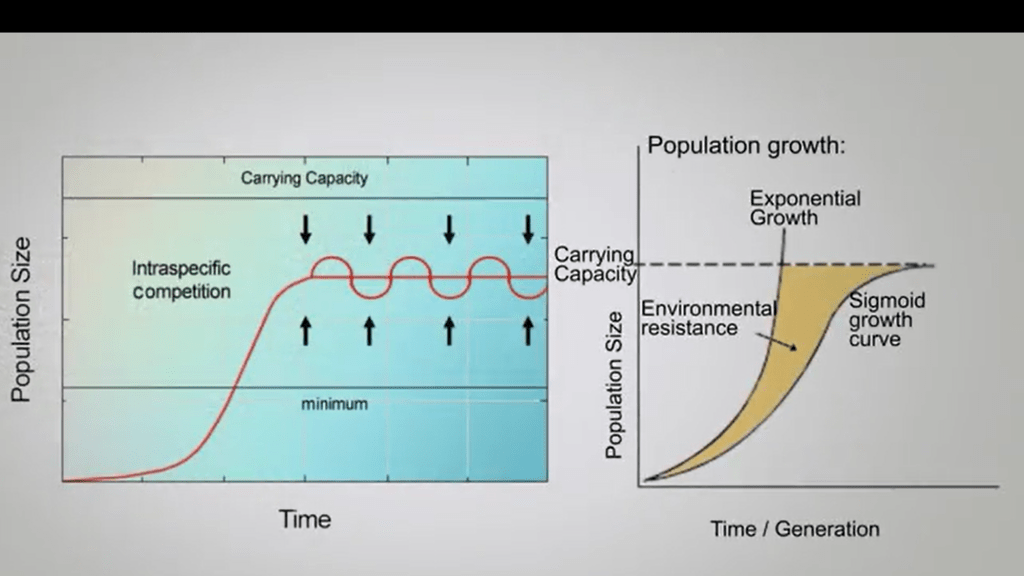
Dispersal and migration liabilities reducethe competition for space and resources. And at the same time, the rule and the niche of a species come from the past interactions. Even if competition is the most studied interaction in ecology, models are too simple. And no real species asunique realize in niche.
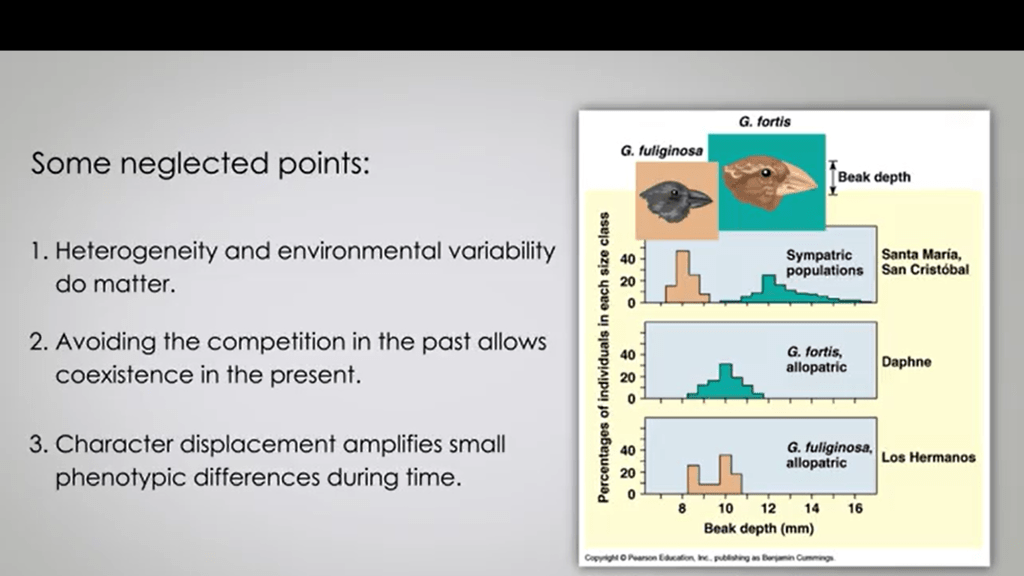
We have no proof of competition now,and in the past. Therefore, we need to move behindextreme line model or competition. There are some neglected points. Heterogeneity and environmental variability do matter. Avoiding the competition in the pastallowed the coexistence in the present. And character displacement amplifies small phenotypic differences during time.
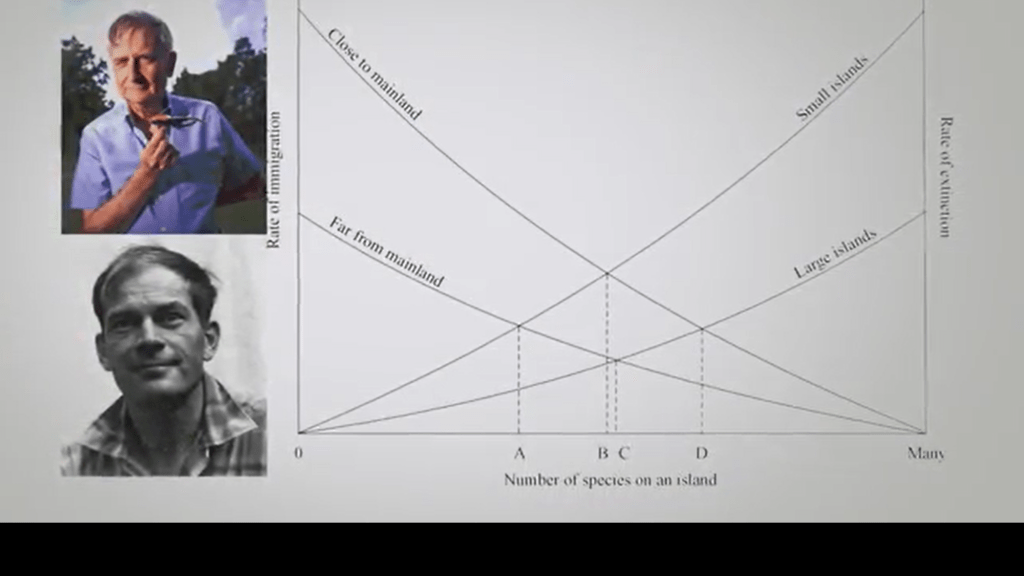
In 2001, Stephen Hubbellproposed the neutral theory of biodiversity with random vat,speciation, and dispersal. In this theory, the essential feature isthat species are considered all equal or identical andthey have all the same fitness. Together with the equilibrium theory of island biogeography proposed by MacArthur Wilson, neutral theory have increased the importance of species’ niches. We will discuss it in more detail during next lecture.
 Mathieu GT
Legg igjen en kommentar